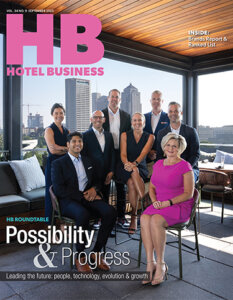
In hospitality, “possibility” is about unlocking opportunity—for guests through innovative experiences and for employees through meaningful career paths that can begin anywhere and lead everywhere.
At a recent Hotel Business roundtable, hosted and sponsored by Rockbridge at The Junto in Columbus, OH, in conjunction with the annual RTRX conference, leading voices from across the hospitality industry gathered to explore the meaning of “Possibility: The Path Forward.”
Moderated by Christina Trauthwein, VP, content and partnerships, Hotel Business, the conversation delved into how the hospitality industry can evolve, serve and grow in an ever-changing world, emphasizing optimism, opportunity and practical strategies for operators, developers and investors alike.
The panel included Nala Holmes, VP, development, Pyramid Global Hospitality;
Ben Pierson, managing director, Rockbridge;
Tim Ryan, chief investment officer, campus lodging, AJ Capital; Lisa Sexton, SVP, development, Marriott International; Shawn Tuli, chief investment officer, HHM Hotels; Matt Welch, managing director, Rockbridge; and Mike “Woody” Woodward, EVP/chief growth officer, Hospitality Ventures Management Group (HVMG).
Defining possibility
Trauthwein opened by asking the group to define possibility in the context of hospitality. For Welch, the word conjures a fundamental optimism that is prevalent in the industry.
“There’s something just optimistic about the word possibility,” he said. “I really think being in hospitality, generally, all of us are optimists. We love hosting, we love entertaining and we love bringing everyone together.”
Woodward focused on the human element and people development as central to possibility. “What possibility means to me in our industry, especially as an operator, is giving individuals opportunities to grow personally and professionally,” he said, pointing to the Hi-Impact Heisman Award at RTRX, which honors hospitality workers who have overcome adversity. “This year, we had three team members from HVMG attend the ceremony out of the four who were nominated. Deb, who won the award, has been in the industry for 50 years. She brought her son with her on the trip, and he said, ‘We are just so blessed.’ It makes him want to get into the hospitality industry.”
Pierson reflected on the humility and humanity the Hi-Impact Heisman Award stories convey. “It’s really humbling,” he said. “You read what these people have overcome and how they impact their teams.”
For Ryan, possibility is tied to growth mindset. “You’re constantly improving the model, the brand and the execution,” he said.

Ben Pierson, Rockbridge
Possibility is a pathway for partnerships, according to Sexton. “It’s about meeting new people, working with new owners and bringing people into the Marriott family who may not have been owners of ours in the past,” she said.
Holmes brought a broader lens to the concept. “We don’t deal with buildings,” she said. “We work with people. Possibility is continuing to find ways to deliver—whether it’s experiences for guests, great healthcare for associates or profit for our owners.”
Tuli emphasized curiosity as central to possibility, noting, “We infuse our approach as operators and investors with curiosity. It’s about embracing the individuality of our team members, our owners and our guests and turning that into a service offering.”
Growth mindset
The group was asked how hospitality leaders can encourage curiosity, adaptability and a growth mindset among their teams.
Welch framed the industry as one defined by complexity and possibility, where leaders must “lean into the individuals” to unlock potential. “I’ve always loved real estate, but .but I fell in love with hospitality because what you get is service business meets real estate—and all the opportunities that come with that,” he said. “And it just makes for this Rubik’s cube of possibility, opportunity and complexity. If you lean into that, let people be who they are and create opportunities for them to flourish, I think there’s something really powerful in that.”
For Woodward, the heart of growth in hospitality lies in passion and optimism.
“At a very young age, I was told you don’t find hospitality, hospitality finds you,” he said. Those who don’t have “an optimistic outlook, with a passion for service, with a passion for people and, most importantly, a passion for knowledge” often don’t last.

Matt Welch, Rockbridge
But for those who stay, he added, “as long as you care and have that passion for learning and you ask questions, it doesn’t matter if you’re competitors. You’re still best friends, and you’re still grabbing a beer at the end of the day and talking about the good and the opportunities that are ahead of us.”
Holmes emphasized the unique social mobility within hospitality, where career paths can stretch far beyond entry-level roles. “Hospitality is maybe one of the only industries where there’s true ability for social mobility,” she said. “You can come into the industry and start as a bell hop or another entry-level position, and you can grow and end up running a portfolio of beautiful resorts all across the country.”
To foster that mindset, she stressed the importance of “taking deliberate steps and creating road maps, where you say, ‘Here are the tools and the resources if you want to grow with us, which we hope you do.’”
Tuli pointed out that the very nature of hospitality lends itself to growth thinking. “Our industry, by nature, has a growth mindset built into it,” he said. “Travelers are seeking new experiences, and they’re expecting you to deliver. It’s hard to be in the industry if you’re not inclined to serve others first and give before taking. One of our values is ‘Hearts That Serve,’ and it’s hard to live that unless you’re really inclined to do so, whether by nature or by finding the space.”
That growth comes not only from individuals but from the industry’s constant evolution. “Customers’ preferences change,” Pierson said. “The world changes. The world evolves. Dynamics change. And so, the brands have evolved.”
For those who thrive in dynamic environments, hospitality offers endless opportunities. “If you don’t want a static business and you care about people, it’s an endlessly interesting business because not only are you interacting with great people, but it changes and presents opportunities to do new things and serve people in new ways,” he said.
Why hospitality matters
As the roundtable shifted to the future of the industry, participants agreed that even in a world of rapid change and contactless convenience, hospitality remains essential.
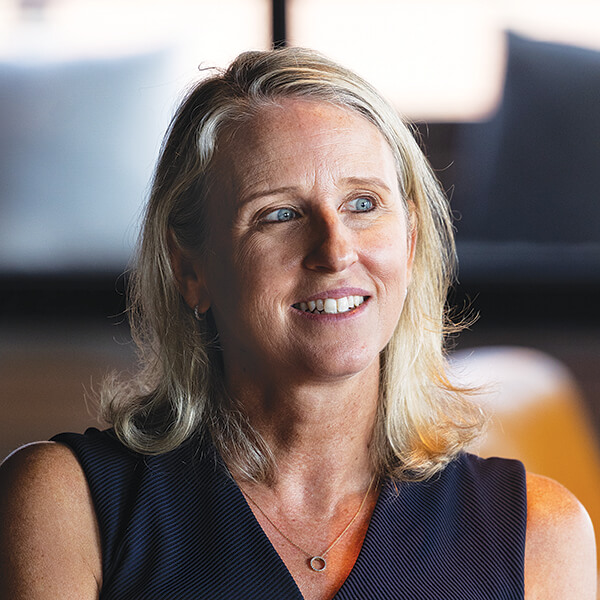
Lisa Sexton, Marriott International
Marriott’s Sexton pointed out that travel itself continues to grow in scope and purpose. “People love to experience things,” she said. “They’re traveling for youth sports more than ever, traveling multigenerationally, traveling for business, vacations and special occasions. It’s not always the same hotel that works each time, which is why we focus on offering a breadth of brands to meet those different needs.”
Pierson argued that hospitality now extends far beyond hotels. “It has proliferated into all aspects of life,” he explained, citing the role it plays in office spaces, retail and mixed-use developments. “Hospitality is timeless; human interaction and experience are timeless. The more people get drawn to their phones, the more they’re going to crave that true hospitality.”
The industry is a meeting point for work, lifestyle and personal growth, according to Tuli. “The idea of work-life balance has completely changed,” he said. “Hospitality is at the intersection of professional pursuits, personal exploration and wellness. It’s perfectly suited to provide that.”
The value of hospitality is best understood through contrast, according to Welch. “It’s hard to define exactly, but you know it when you see it and when you feel it,” he said. “And you know it when you don’t get it, too. That emotional reaction, whether you feel cared for or neglected, is at the center of everything.”
Excitement for future
What makes hospitality so exciting today is the endless opportunities for travelers, the ways technology can enhance their experiences and the lasting impact of genuine human connection.
HVMG’s Woodward sees the industry as a gateway to new experiences that travelers might not even know they want until it’s there.

Nala Holmes, Pyramid Global Hospitality
Concepts like glamping and treehouse stays, once niche, now spark curiosity and open doors to new passions. “Now that these experiences are affiliated with strong brands and strong values, you think, ‘That sounds pretty cool. Let’s try that,’” he added. “It opens so many doors to new ideas and new places.”
Innovation in guest experience also drives excitement. Welch pointed to the seemingly simple frustrations that technology can solve. “One thing I hear most is, ‘I hate when I get the mobile key, and it doesn’t work,’” he said. “It’s so aggravating. The more our world gets plugged in, the more we can smooth out those edges and make travel seamless again. Hotels are test kitchens where we can try new things, whether it’s mobile experiences or creative amenities.”
But Holmes stressed that true innovation isn’t just about tech—it’s about connecting people to the experiences. “It’s one thing to have the amenity available,” she said. “It’s another to connect it to the guest. You want to integrate tech to make it seamless, but it’s about connecting people with guests to create one holistic destination.”
Technology must also serve the human element of hospitality. Ryan noted, “We should be freeing up the GM’s bandwidth to do what has the best impact on the guest experience.”
Leaning too heavily on automation can undermine the very heart of the business. Ryan recalled a stay where a request for towels was handled by a chatbot.
“Hospitality is a human touchpoint,’ he said. “If you lose that, it’s a major fail.”
Pierson agreed, describing the balance between personalization and automation. “The heart of hospitality is the human being,” he said. “AI should empower the human beings, making experiences feel customized in a genuine way. It’s not about pushing an amenity on someone, but knowing what matters to them and meeting them there.”
HHM’s Tuli summed up the sentiment by looking ahead. “The rate of change on how folks are engaging with tech is moving so fast,” he said. “What excites me is that we’ll be sitting here five years from now having figured out some of the things we’re wrestling with today—and discovering new ones we haven’t even thought of yet.”
Momentum building
Luxury and lifestyle experiences are currently showing surprising momentum, capturing both traveler interest and increased spending, according to the panelists.
Sexton pointed to the growing strength of the luxury segment. “People are willing to spend more than ever to have really wonderful experiences,” she said. “When you create the environment, people are willing to pay for the hotel and the experience. Luxury hotels are a big focus for us right now, and that’s something that has been surprising.”

Shawn Tuli, HHM Hotels
Holmes emphasized the resilience of high-end travelers. “The amount of wealth in this country is staggering,” she said. “Fortunately for our industry, people are willing to spend it on experiences.”
Travelers are now shifting their priorities from material goods to curated, unique experiences. “It just seems like this trend has an extended window, and we’ve been able to take advantage of it,” she added. “Lifestyle luxury will continue to see a lot of growth and momentum.”
Welch pointed to the numbers behind the trend. “One thing you’ve seen is the share of wallet spend is just going up,” he said. “The data supports the feeling that people want travel and are prioritizing it.”
Pierson highlighted the industry’s role in creating and capturing value. “The affluent segment is durable,” he said. “Even with inflation, people are willing to pay for value. The industry is figuring out new ways to create value for customers. Some experiments will fail, some will succeed, but it’s about being creative and dynamic. Customers are flexible—they might pay for cocktails, but not for other amenities. Finding that balance is where the momentum lies.”
Beyond the room
In today’s hospitality landscape, value is increasingly defined not by the room itself, but by the experiences and thoughtful touches that surround a guest’s stay. “Consumers are picking the amenities,” Tuli explained. “They’re choosing the craft cocktail program, the art program, the outdoor pool experience. That’s often the entry point now.”
Sexton echoed this perspective, describing efforts to tailor offerings based on location and guest expectations. “We’re working on premium product differentiation,” she said. “An airport hotel guest may just want a hot cup of coffee in the morning, while an urban or resort traveler is seeking a more curated experience. Our goal is to adapt standards to the customer’s expectations without overdeveloping offerings where they may not matter.”

Tim Ryan, AJ Capital
Woodward emphasized the power of understanding why guests travel and anticipating their needs. “If someone’s on vacation, no matter their background, that’s their one vacation,” he said. “They’ll dive into the cocktail program and not care about the price. If we understand the purpose of a guest’s trip before they arrive, we can hit all cylinders authentically. Do it right, and you own that customer for life.” He added, “Those guests become your best marketers, telling friends about what happened during their stay—the little things that make a memory.”
Ryan highlighted the potential of combining technology with human insight to enhance these moments. “AI can consolidate the effort required to anticipate guest needs,” he said. “Imagine checking in, and the hotel already knows your flight was delayed, enabling staff to provide a personalized, proactive welcome. It’s about efficiency that stays tethered to human touchpoints.”
Pierson expanded on this, noting that strong leadership at the property level is critical. “The front desk agent learns by example,” he said. “When leadership demonstrates thoughtful service, it becomes second nature across the team. Scale allows brands to deliver this consistently, even across multiple locations, integrating technology without losing the human element.”
Welch summarized the approach as blending timeless service with innovation. “Take the timeless component—the ‘Labrador gene,’ the innate desire to care for others—sprinkle in tech and unlock the magic of hospitality,” he said. “The service level stays timeless, but the ways we deliver it evolve.”
Unlocking opportunity
The hospitality industry isn’t just about hotels—it’s a launchpad for careers, creativity and personal growth. “We need to do a better job of educating the world on the opportunities and possibilities,” Woodward said, pointing out that even entry-level roles can lead to top leadership positions. “You don’t need an Ivy League education to become a CEO or owner. You go through the school of hard knocks, and you learn every position along the way.”
Holmes emphasized the importance of nurturing talent once it enters the industry. “We want to keep people in our ecosystem and grow them through our portfolio,” she said. “It’s about giving associates opportunities to move from one hotel to another and also being present in communities—high schools, colleges, technical schools—so people see that they can come straight into the hotel and have social mobility.”

Mike “Woody” Woodward, HVMG
She said that personal networks matter, too, noting, “If someone has a great experience at a hotel, they tell friends and family. Some of our hotels are even run by multiple generations of the same family.”
Pierson highlighted the broader impact of hospitality, both for individuals and communities. “If we champion the human side of this business, it benefits everyone,” he said. “Our assets perform better, and we have better people in the system. Hospitality creates jobs, security income, training and opportunities, and it can even positively affect communities through taxes and economic growth.”
Stories of transformation illustrate the industry’s potential. Woodward recalled one RTRX guest speaker’s journey. “He grew up in a tough part of Los Angeles, didn’t know what opportunities existed and then someone came into his class and explained how they fund businesses,” he said. “That lit a match, and now he’s helping others at a much larger scale. That’s the power of showing people what’s possible.”
Tuli added, “There are so many paths. Someone can start as a line-level associate and become a revenue manager, an asset manager or move into creative, marketing or finance. Our space is unique. Real estate, operations, business and everything in between—everything’s possible.”
Key Takeaways
“I love the vocabulary of ‘Empowered by AI,’ because it dovetails with doubling down on the human touch, and so we can do both.”
— Shawn Tuli
“Unless you have really good people running the hotels and have really good partners, without all that human connection, the industry won’t tick the same way it should.”
— Nala Holmes
“When you’re doing the right things with the right people and trying to learn over time, stacking that day after day will lead to great things.”
— Ben Pierson
“It’s a nice reminder that we sometimes need to just take a deep breath and listen.”
— Lisa Sexton
“We’re all going through our own different versions of the same central struggles, and those struggles can get right-sized and become more manageable when we’re reminded that we’re not alone and that we have people who we can exchange ideas with and who we can lean on.”
— Tim Ryan
“I’m going to challenge myself to use a platform to help promote what this industry really is for people who don’t know what we are and what we do.”
— Mike “Woody” Woodward
“The idea that we can pursue innovation while also preserving the timeless art of hospitality—I love that balance. It sounds almost like an oxymoron, but it works. We’ve got all this great technology and advanced tools, but the goal isn’t to replace people—it’s to refocus their time so they can lean into what hospitality is really about. That’s what makes me optimistic.”
— Matt Welch