

Not long ago, hotel financing was as easy as dialing up a few banks and fielding a handful of competing offers. Today, those days feel like a distant memory. Instead, hotel owners and investors face a lending environment shaped by tighter credit, higher rates and a capital market that’s as much about adaptability as it is about assets.
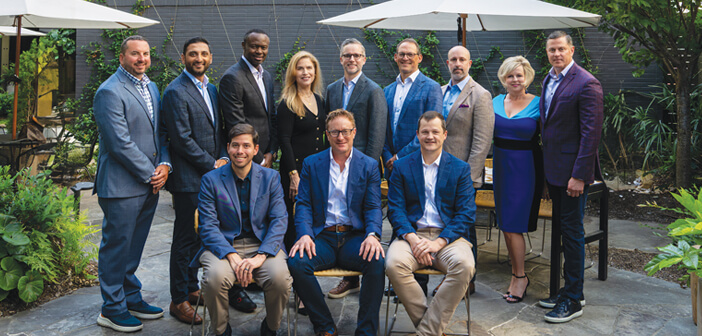
Hotel Business recently held an executive roundtable, “Chasing Smart Money: Where’s the Capital in Today’s Turbulent Market?” where hotel executives discussed navigating today’s challenging capital landscape. The event, hosted and sponsored by Peachtree Group, was held at the Kimpton Sylvan Atlanta – Buckhead.
Moderated by Christina Trauthwein, VP, content & partnerships, Hotel Business, the panel included Evens Charles, president/CEO, Frontier Development & Hospitality Group; Michael Coolidge, chief investment/development officer, HRI Hospitality; Mary Beth Cutshall, chief growth officer, Vision Hospitality Group; Billy Gilchrist, chief financial & investment officer, ARK Holdings Group; Michael Harper, president, hotel lending, Peachtree Group; Teague Hunter, president/CEO, Hunter Hotel Advisors; Blake Longstaff, SVP/CFO, Americas, IHG Hotels & Resorts; Jared Schlosser, head, credit originations and commercial CPACE, Peachtree Group: Jason Rabidoux, chief investment officer, Davidson Hospitality Group; and Ricky Raman, COO, PeachState Hospitality.

LEFT TO RIGHT: Jason Rabidoux, Davidson Hospitality Group; Billy Gilchrist, ARK Holdings Group; Michael Harper, Peachtree Group; Evens Charles, Frontier Development & Hospitality Group; and Teague Hunter, Hunter Hotel Advisors
While it may be difficult to access capital in the same manner it has traditionally been done, Gilchrist pointed out that times have changed and new forms of lending have come to the forefront.
“Capital has not necessarily been easy to obtain, certainly in the conventional sense, over the last couple of years,” he said. “Local mutual banks are often at capacity, but there are still great hospitality deals out there that need to get done. Private lenders have stepped up to fill the gap, and they’ve become great partners in this environment.”
This shift has certainly been dramatic for some investors and owners. For many, it’s a wake-up call. “This conversation about capital wasn’t even necessary in the last cycle because money was plentiful and everyone was participating,” recalled Harper. “You could call three banks and get three bids, but today’s reality is very different. Interest rates have stayed elevated for so long that lending has become a much more complex and topical issue for hoteliers.”
With transaction volumes down and investors sitting on the sidelines, the search for smart capital has become urgent.
“We’re in a challenging market with fewer transactions and investors looking to redeploy capital, making conversations about hotel lending more relevant than ever,” explained Cutshall.
One of the most significant changes is the return of creativity to hotel financing. The basics of the hospitality business may remain, but the strategies for finding funding have evolved.
“The lending environment has shifted dramatically in the last five years,” said Raman. “Now is the time to talk about where the right capital is, how to source it and how to get creative. If we’re not having these conversations, we’re missing the boat in a turbulent market.”
Unlike the other companies represented in the room, IHG Hotels & Resorts doesn’t own its assets, so Longstaff took a different approach.

Jared Schlosser, Peachtree Group (left); and Ricky Ramam, PeachState Hospitality
“We’re highly focused on understanding capital trends,” he said. “On the debt side, it’s not something that we historically got into, and we are focused more on that now. We’ve added one resource and will continue to add other resources to help our owners, especially new hotel owners, better access debt capital. We help them with their pitch to the banks, selling the IHG story.”
So what’s working? Debt is still available, but it comes at a higher price.
“Debt is much healthier than equity in today’s market, and everyone seems to want to sit on the credit side,” said Coolidge. “While loans are available, they’re not cheap, and the real challenge is finding LP [limited partner]equity because much of that capital is still sitting on the sidelines. High interest rates and slow growth have put pressure on bringing new equity into hotel deals.”
For some, the challenge is less about scarcity and more about adjusting expectations. “People say it’s challenging, but there’s actually plenty of capital out there—it just requires an adjustment to the new world of underwriting and higher rates,” said Schlosser. “Finding capital isn’t the problem; it’s understanding the new dynamics and accepting we’re not going back to 2021 anytime soon. This is the reality for hotel lending now.”
The capital shift
Whether you’re acquiring, refinancing or simply trying to keep your property’s capital stack healthy, today’s lending environment demands flexibility, open-mindedness and—above all—creativity. The easy money is gone, but for those willing to adapt, new opportunities are waiting.
Resetting expectations is the new order of the day, according to Gilchrist. “Certain investors are so used to one thing from the last cycle, and it’s not the same anymore,” he said. “With the way the interest rates are, you’re just not going to get the same return you did before. It may be more about holding longer and getting your return on exit versus a cash-flow play.”
Risk is everywhere—and everyone’s recalculating. As Rabidoux pointed out, “We don’t have a problem finding capital; it’s how investors are looking at the risk. Everyone’s focused on going-in yield and worried about being upside down on returns. The risk equation right now is tougher, and people are more concerned about back-ending all their returns.”

Michael Harper, Peachtree Group, and Blake Longstaff, IHG Hotels & Resorts, have a chat.
Buyers and sellers are at an impasse, and high construction costs are complicating matters for developers. “When I talk about challenges, it’s not just the credit markets—it’s the gap between buyer and seller expectations,” said Charles. “Trying to do new construction today is almost impossible with today’s cost of capital. For those of us still making transactions happen, it’s tough.”
But some see a silver lining in the slowdown. Cutshall noted that there may be an opportunity for construction because there has been a slowdown in new supply.
“General contractors are getting more competitive, and it’s making us better at underwriting and programming our hotels for efficiency and margins,” she said. “If you have a track record of building well, that’s going to be more important than ever—for both equity and capital.”
Still, equity is the hardest part of the puzzle, according to Harper. “Debt capital is out there, but hotels are a small part of the broader ecosystem and everyone has limited allocation,” he said. “If you haven’t realized investments from the last cycle, you don’t have new capital to deploy. There has to be capitulation from sellers—a reset—before things start moving again.”
Debt, on the other hand, is accessible, Hunter noted, with options such as CMBS, balance sheet lending and private credit, the latter of which he said “is only getting bigger.”
He added, “But with equity much less available, we line up deals, get the debt, even half the equity, but it’s hard to get that last piece to close. Sellers just won’t sell at the cap rates buyers can afford, so it comes down to finding buyers who see more upside than anyone else.”
The big investors are getting more cautious, said Rabidoux, as more and more equity groups “are shifting to risk-adjusted positions—deploying out of their credit fund, special situations or seeking more secure yield. Everyone’s doing a cost-benefit analysis and being careful about where they play.”
There’s also the looming cost of renovations. Coolidge explained that every deal now has a renovation cost gap and “many sellers have held onto properties for years with no appreciation, and now there’s a massive capital pit to fill. That can kill deals if not properly factored in.”
Operations and underwriting
In the new world of hotel lending, it’s not enough just to find a deal—you need to be the kind of operator and real estate professional who truly belongs in the game.
“Coming out of the pandemic, you had people not just in the hotel business, but the real estate business as a whole, doing deals that they had no business doing,” said Schlosser. “Now, there is a gap between the credit spreads and the equity spreads. Equity will come back in short order, but what this is really doing is separating really good operators and real estate professionals from people who probably shouldn’t be in the business.”
Operational excellence is now essential to reaching a performance goal. “Ten years ago, you could bake in a cushion in your pricing, now you need your partner to deliver that 1-5% advantage you’re underwriting towards,” said Raman.
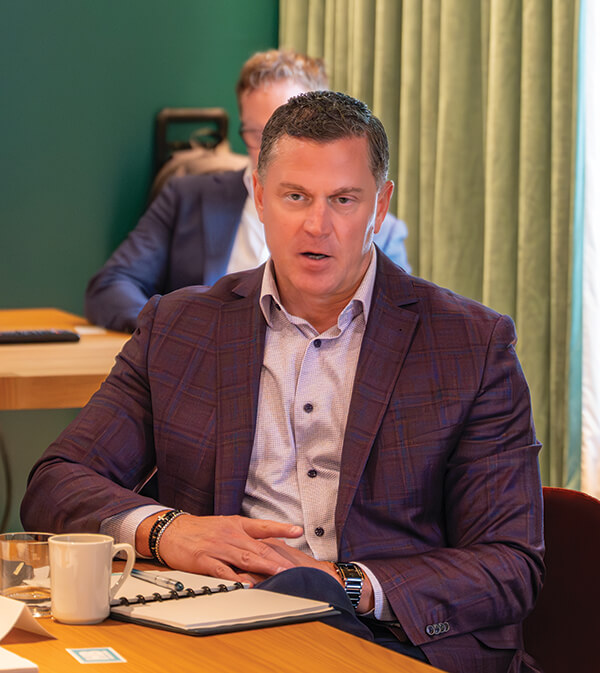
Michael Coolidge, HRI Hospitality
That means underwriting standards have gotten tougher and more detailed.
“We always take a ground-up, detailed approach, but now bridging to better yield sooner is a bigger focus,” said Rabidoux. “You used to bank on value after renovation, now you have to figure out where you can get to in the first 12-18 months and bridge that gap fast—it’s a tough balance.”
Most of the transactions today are refi driven, according to Schlosser, who added, “If you have low cash flow, it’s very difficult to underwrite that up to a level where you can cover your debt. Ninety percent of what we see is someone sending us a refi hoping to get from X to Y, or else it’s never going to debt service cover. You can’t just say, ‘I’m going to buy; it’s good.’ Every deal now needs a real sales and marketing plan for how you’ll turn that hotel around—or no one will look at it.”
And for lenders today, the sponsor matters more than ever before, according to Hunter. “Let me see your track record and business plan, and if you don’t have all that together, you’re not getting a loan,” he said.
IHG constantly brings in new franchises to the organization, some that have never owned a hotel before or have owned multifamily properties. “They have access to capital, but only at low loan-to-value ratios [LTVs],” Longstaff explained. “There’s capital out there, but bridging the equity gap is tough, and higher LTVs are hard to get in the hotel industry.”
The pressure on development is intense, according to Coolidge, who notes that deals that looked good six or nine months ago now “don’t pencil” because of tariff pressure, high interest rates and rising construction costs.
“The return requirements haven’t changed, but everything else has gotten harder—so now you have to get creative with brand money, key money, preferred equity or CPACE just to make a deal work,” he said.
Underwriting itself is more conservative, more complex and demands more risk mitigation than ever before. “We’re forced to put in more model inputs and run more scenarios than we used to,” said Raman. Charles replied, “I pack more contingency into everything, especially construction, and do extra diligence with my procurement and general contractor teams to make sure we have as much accurate data as possible before we jump into a deal.”
Liquidity and a strong balance sheet have become the ultimate deciders for lenders, said Harper, who added, “If you miss something in your underwriting—and you will—it’s liquidity that gets you through. That’s how we pick our winners.”
Room for optimism
Despite the caution, there are reasons to be optimistic about the attractiveness of hotels as an investment. “If you actually step back, the secular trend of our industry today is much stronger than five or 10 years ago,” said Longstaff. “Hotels used to be considered the riskiest real estate asset class—now, we beat office, we beat retail. Returns haven’t moved much yet, but the industry’s position is much stronger.”
There was a time when hotel development was straightforward: Pick a proven brand, build it at a reasonable price and the rest took care of itself. But that path has changed since the guest experience has changed.

Mary Beth Cutshall, Vision Hospitality Group
“We used to build Holiday Inns and Holiday Inn Expresses for $100,000 a key, and they worked—and you knew they were going to work,” recalled Hunter. “Now we’re building Kimptons for $400,000 a key because today’s customer wants a curated experience, and we need professional operators to manage it.”
In this high-cost, experience-driven world, the brand behind a property is more important than ever. “The right brand in the right market will always bring the capital stack,” said Gilchrist. Even local community banks, once more flexible, now scrutinize the brand and its ability to drive reservations and compete.
“They are now saying, ‘What’s your brand affiliation? What’s your competition? Are you diluting your channel contribution?’” explained Raman. “It’s become a huge conversation, as it should be, and sponsors need to pick the right deal at the right time.”
Liquidity at exit is also deeply tied to brand recognition. “If you want liquidity at exit, everyone wants to see a brand on it,” said Harper. “Private equity shops and REITs aren’t buying boutique hotels for the most part. Just having a brand is a threshold item for a lot of people.”
The advantage of a strong brand is clear, noted Schlosser. “It’s about distribution,” he said. “If you’re doing a boutique hotel, you’re starting at the five-yard line. With a big brand, you’re starting at the 50. It doesn’t mean you won’t score, but it’s a whole lot harder.”
Brands themselves are also upping their game with data transparency. “Today, brands are putting out more data than ever on reservation contribution,” said Raman. “Now everyone knows what an IHG or a Marriott delivers, and that transparency lets sponsors and lenders have honest conversations about where the contribution is really coming from.”
But it’s not just the brand—it’s the segment that matters. As Charles pointed out, “Extended-stay and select-service are more efficient and lower risk—and that makes them more appealing to the capital markets.”
Several of the panelists echoed his sentiments about the extended-stay segment, with Cutshall noting it “continues to be the darling,” while Gilchrist said, “Whether it’s Home2 Suites or a TownePlace Suites, they love the space. It feels like home, and that’s driven a lot of the capital.”
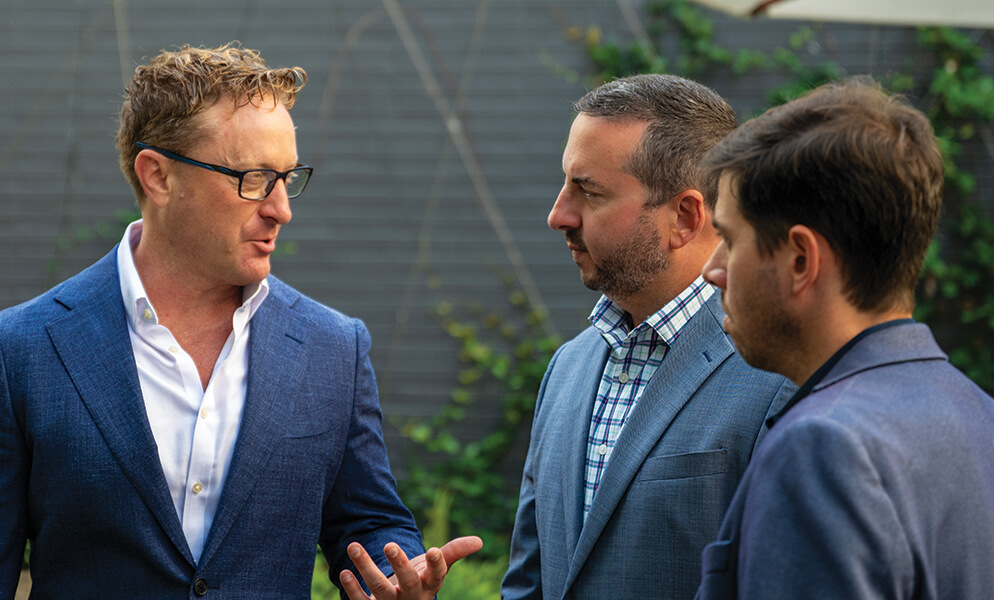
LEFT TO RIGHT: Brent LeBlanc, Peachtree Group; Billy Gilchrist, ARK Holdings Group; and Jared Schlosser, Peachtree Group
Versatility is the key, especially with today’s costs. “I can sell a Residence Inn for one night or 30 nights, but I can’t do that with a typical Hampton Inn,” said Raman. “With construction costs and the cost of capital where they are, we want as much versatility as we can get, no matter the brand.”
Coolidge touted the lifestyle, select-service segment, noting his company has done well with those types of hotels.
“I think that segment has a lot of runway—it can drive rate and has a really efficient operating model,” he said. “When we opened the Tempo by Hilton hotel in Nashville in 2024, we were close to an ADR of $300, which solves a lot of ills on the risk side. When you’re able to do that, you’re competing with full-service boxes.“
It’s all about the experience for the guest, said Cutshall, adding, “That’s why lifestyle brands are thriving. Franchisors will become engines of experience, not just loyalty—evolving to capture guests from competitors with new offerings.”
Raman followed up asking, “Where does the midscale, extended-stay fit in?” There are boatloads getting built—15 or 20 at a time.”
Hunter said his firm is keeping an eye on that segment. “Everyone’s jumping in, not just for the transient guest but as a yield play—build a portfolio and then sell to Wall Street. But there just aren’t enough of them yet, so everyone’s hedging their bets and trying to presell.”
Operations are make-or-break in the economy, extended-stay segment. “You have to operate it the right way—almost like an apartment complex—or you won’t make money,” said Gilchrist. “Some have failed in leisure markets because their margin gets eroded if they become just another transient hotel.”
Simplicity is also key, said Raman, noting, “It’s the inverse of the amenity creep—keep it simple, keep it sweet.”
But even simplicity needs a smart strategy. “The franchisees most successful with Candlewood Suites are the ones who change their business mix, minimize transient stays and maximize margin through extended stay,” said Longstaff.
Charles asked the panel: “What’s the secret to growing this business?” The answer, according to Cutshall, is discipline. “It’s having the confidence to say no to short-term transient and focusing on long-term, relationship-driven business,” she said. “Development starts with targeting the right markets and demand generators.”
Getting the right mix of guests takes constant attention. “We enable our sales team to play Tetris with the business mix every week, month and quarter to optimize returns,” said Raman. “Historically, you just filled rooms, but now you ask your team to run displacement calculations and play the long game. Every day is a ramp day—there’s no plateau. You have to keep it fresh because things are always changing.”
Filling the gap
Tighter regulations and shifting risk appetites have opened the door for private lending to make a big impact on hotel lending.
“The more we’re regulating banks coming out of the Global Financial Crisis, the more we’ve opened up the door to private credit,” said Hunter. “Private credit, private debt—these are entrepreneurs raising capital, underwriting the project and offering terms that might be riskier, but they are filling the gap where banks have pulled back.”
That willingness to take risks comes at a price, but sometimes expensive debt is better than no debt. “Private lenders are willing to take more risk,” he said. “They want to get paid for it, so they’re more expensive—but they’ll lend to your project if you’re not cash flowing or hitting coverage ratios. Some debt is better than none.”
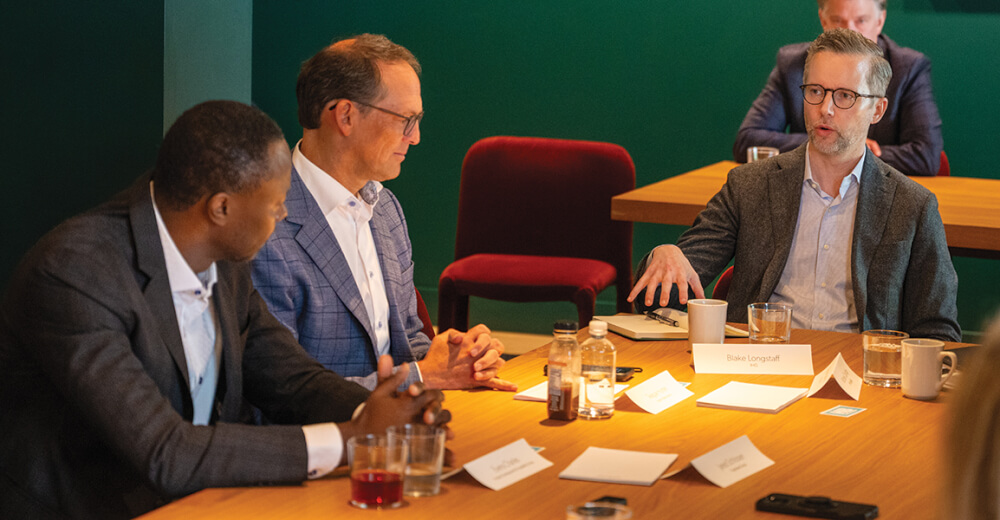
Teague Hunter, Hunter Hotel
Advisors (left), and Blake
Longstaff, IHG Hotels & Resorts
Traditional banks, meanwhile, have fundamentally changed their model, explained Harper. “Banks are deleveraging and focusing on the most secure part of the capital stack and getting risk-adjusted returns,” he said. “There was a mismatch: banks made 4% while equity made 20% on every dollar above—that wasn’t equitable. So banks pulled back, and now risk-adjusted returns are moving throughout the stack and adjusting upwards.”
The result? Most banks are not eager to make direct real estate loans anymore. “You don’t make money making a real estate loan, and it just took COVID for bankers to figure that out,” said Schlosser. “The industry is changing—banks are more regulated, not getting deposits, not getting treasury management. Now they’d rather make a C&I [commercial & industrial]loan to a private credit vehicle than a direct real estate loan. That’s where the industry is going.”
For hotels, the challenge is magnified by risk perceptions. “Banks have always not liked hotels,” noted Harper. “As a former banker, I know hotels are listed in the credit policy as most risky, right next to gas stations.”
The complexity of hotels versus other asset classes makes it even tougher. “Why do people lend on hotels?” asked Schlosser. “I can make a multifamily loan by looking at five comps down the street, figuring out what they’re renting for and figuring out the sales that have happened. Why should I do hotels when they have so many brands and tons of segmentation? Bankers are generalists and often don’t even know the brands they’re lending against.”
When a crisis hits, the risk difference becomes stark. “Other asset classes—industrial leases, for example—kept paying during COVID,” Harper explained. “But hotel revenues went to zero overnight. It’s a different risk profile, which is why private credit is stepping up not just in hotels, but across commercial real estate. But hotels were probably an earlier mover in it, and post-COVID, hotels have actually outperformed multifamily, which has pulled back much further.”
In today’s hotel market, closing the capital stack means pulling every lever—sometimes all at once. “We just did two projects with CPACE as a backup,” shared Gilchrist. “One was a Home2 Suites in Tampa—arguably one of the best brands in one of the strongest markets—but we couldn’t find a lender because so few banks in Florida can do a $15 million loan. So CPACE was huge in getting it done, letting us go beyond the 70% traditional lenders would do.”
Co-general-partner (co-GP) deals are becoming more popular, especially for out-of-market developers.
“We’ve got five projects going in Texas—all with local co-GPs because we didn’t want our first ones there to be on our own,” Gilchrist explained. “It allows for splitting of the capital raise, and helped us get loans and sign guarantees.”
For companies such as Davidson, the co-GP route really doesn’t make sense. “The size, scale and nature of the assets that we’re involved in, either from an acquisition standpoint or management, the number of inquiries we get in terms of a co-GP play are just not an efficient deployment of capital,” said Rabidoux. “Those pieces of the stack are very difficult for the space that we play in.”
Tax incentives and key money can play an important role in making a deal happen.
“I’ve had a couple of public-private deals, and the benefit of those is I can always go back to that public partner and say, ‘Can we look back at the capital stack? Can we look at a tax abatement, or whatever the case may be, to keep the project going?” Harper replied, “There’s not a development done without key money today.”
He added that bank consolidation has created a greater need for alternative capital sources.
“There are just fewer lenders out there on the bank side, so you’re getting incentives from the public partner, whether that’s tax abatement or other incentives,” he said. “And then you’re bringing in CPACE and key money—and it is complex. Generalist bankers’ heads explode trying to figure out when they’ll get paid back, which is why private credit is proliferating.”
When it comes to actual deals, it’s all about real cash equity and commitment. “Of the 10 deals we have signed, seven are non-cash-flowing hotels, but the borrower has real equity and cash in,” Schlosser shared. “At the end of the day, it’s pretty simple business: If you have money and you’re putting that money in the deal, then someone’s going to lend on it. If you’re not, and your real financing is 85-90%, that’s tough to make a loan.”
Deals only pencil when the story is real and the money is committed. “Everyone tries to make deals pencil by raising rates or projecting outsize performance, but it’s easier when you can point to real comps and solid market data,” said Coolidge. “The more creative and committed you are, the more likely you are to get a deal over the finish line in today’s market.”
As construction costs and rates skyrocket, hotel lenders and developers are facing a market with fewer easy comparisons—and more reliance on conviction. “If you go back 15 years, $100,000 a key was a shock,” said Schlosser. “Now you can’t build for less than $200,000. Five or 10 years from now, it might be $300,000. There just aren’t comps—so it becomes qualitative, relying on who you’re lending to and how much equity they’re putting in because we’re seeing development deals without any real sales comparables.”
That leap of faith is offset by the enduring demand for new product and proven brands. “There is data, and new wins always trade at a premium,” noted Gilchrist. “There’s a liquidity premium and REITs that line up for these deals, because once you de-risk it with a long useful life and strong brand, there’s always demand for new product, even if you can’t underwrite the cash flow perfectly.”
But not every market is ready for the price tags some developers hope for—and their pricing out the consumer.
“In Nashville, ADR of $300 makes sense to me,” said Schlosser. “We’ve seen six debt packages in Nashville in the last 30 days of people who are trying to write high luxury construction loans. And they’re trying to get $700-$800 a night in Nashville. The whole reason you go to Nashville is because it’s fun and it’s affordable. If you start spending $1,000 a night to go to Nashville, you’re better off going somewhere else.”
He continued, “Those are the weird trends that we’re seeing. Rural deals are everywhere now, where they’re going to build a hotel for a million a key in the middle of nowhere because access capital is better for rural than it is for Nashville. Yes, it would be awesome to go to a mountain town somewhere, but if it costs so much to go and stay there, I’d rather just go to Nashville.”
Luxury rates are climbing to heights few imagined. “The number of hotels achieving above $1,000 ADR is growing globally, and that’s phenomenal,” said Longstaff. “We don’t have Six Senses in the U.S. yet, but charging $1,500 or $2,000 a night is pretty crazy.”
The rapid growth of leisure—and its risks—are front and center. “ADR growth in the last five years has been built on leisure spend and credit card usage,” said Raman. “When that changes, we’ll have to go back to the underwriting drawing board and rethink how it all stacks up again.”
When developers do get enough capital to build a hotel, where are they building it? What are some of the hot markets?
Raman brought up Savannah, GA, while others said St. Augustine, FL. Meanwhile, “some big institutional and foreign capital has stopped investing in Los Angeles and San Francisco, making them virtually untouchable,” said Harper. “But those markets will become investable and affordable again; it’s always cyclical. Ten years ago, you’d never believe people weren’t rushing to L.A. and San Francisco.”
Even so, some see momentum building on the West Coast. “Seattle’s had its challenges but has a lot of potential with convention center growth and cruise demand,” said Rabidoux. “Labor and politics remain big unknowns, and everything’s just a bit more amplified in the west.”
The Sun Belt story is also coming full circle. “Five years ago, everyone flooded into Sun Belt states—now some are getting burned,” Harper pointed out. “What falls out of favor eventually gets affordable again. The market’s a pendulum, and it always swings.”
Change is coming
After years of uncertainty, the hotel investment community is finally sensing momentum. “There’s more activity up and down the capital stack than there was six months ago,” said Raman. “More activity tells me that we’re actually moving—and in the right direction.”
What’s driving this change? “None of us is here to just sit idly by,” said Rabidoux. “It’s not about timing the market; it’s about figuring out how to play in every environment—and more people are stepping off the sidelines to do just that.”
Inertia is giving way to action. “A developer has to develop to get developer fees,” said Harper. “A lender has to make loans to earn interest. The world’s got to turn, and that’s how the economy functions. You can’t all just go sit in corners; everyone’s been slow, but there’s inertia now.”
“The only thing you know is you’re closer to it happening,” said Coolidge. “There was a mountain of inactivity since COVID, and all those owners who were supposed to sell after five or six years are now at 10. Each of those properties needs capital—it’s coming, it’s just a matter of when.”
Hunter summed up the optimistic turn of events: “We finally have some footing; uncertainty is fading, and I think the next few years are going to be very good—interest rates will fall, capital will flow at every level—and it’s up from here.”
| The Final Word |
| The panelists concluded the session with key takeaways about the lending environment and the future. |
| “Now is the time—things are turning, and there are opportunities in creativity.” |
| —Mary Beth Cutshall |
| “Remember the basics: a clean, comfortable stay at an affordable price, and use this environment to your advantage.” |
| —Ricky Raman |
| “Ignore the noise—do deals. If the fundamentals are right, just press forward.” |
| —Jared Schlosser |
| “Relationships have never mattered more. Transparency and confidence with your partners will see you through uncertainty.” |
| —Michael Coolidge |
| “Debt is very available right now—there’s plenty of capital out there, and I’m genuinely optimistic. I believe tomorrow is better than today, and we’re only headed up from here. At the end of the day, life and this business are all about relationships.” |
| —Teague Hunter |
| “Don’t sit on the sidelines, make adjustments and figure out how to get things done in any environment.” |
| —Evens Charles |
| “Be proactive—don’t wait for the perfect moment. Control your effort, move the ball forward, and that’ll keep everything moving.” |
| —Michael Harper |
| “Move your feet, find a way to add more revenue and remember you’re not alone. Everyone’s dealing with the same things.” |
| —Billy Gilchrist |
| “It’s like when my son plays baseball. When you can be an all-star by failing 70% of the time, you have to have a pretty strong mindset every day. Get back up to the plate again and fight. We’re all attacking in this business day and out from a bunch of different angles. It is important for us all to figure it out together and dig our way out of the challenging market.” |
| —Jason Rabidoux |
