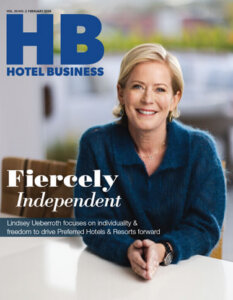
Lindsey Ueberroth focuses on individuality & freedom to drive Preferred Hotels & Resorts forward
As global travel rebounds and luxury demand continues to evolve, hotel owners are rethinking how best to balance scale, individuality and long-term value. For Preferred Hotels & Resorts, that conversation has helped shape a 58-year-old platform designed to give independent hotels global reach while preserving what makes them distinct—an approach that has fueled steady growth, high owner retention and a portfolio of more than 625 hotels across 80 countries.
Over the years, the company has refined a model that allows independent hotels to remain truly independent—while still benefiting from the scale, access and commercial power of a global brand.
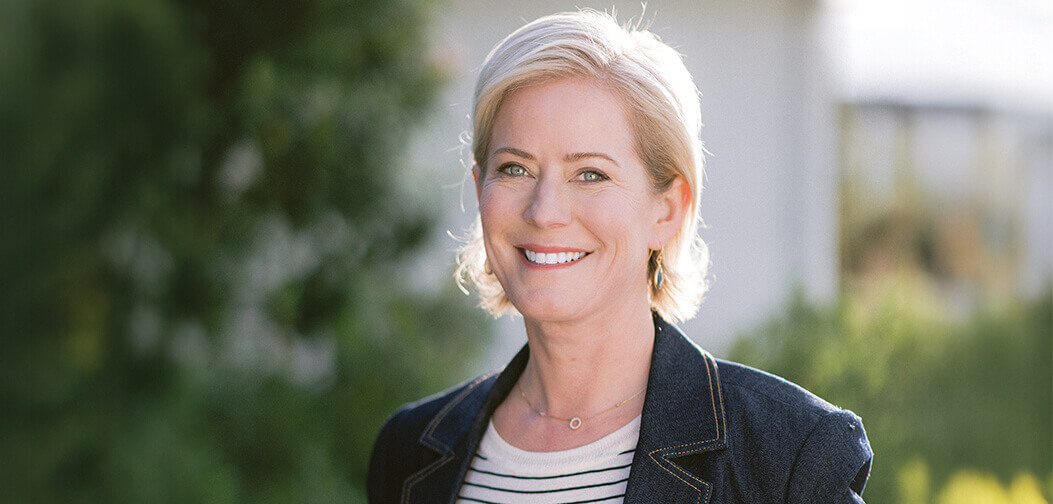
At the center of that strategy is Lindsey Ueberroth, CEO of both Preferred Hotels & Resorts and its parent, Preferred Travel Group, whose leadership reflects the company’s balance of discipline and flexibility, heritage and innovation.
The company was founded in 1968 by 12 independent hoteliers who, as Ueberroth put it, “came together with a shared belief that they could compete against the big chains without sacrificing individuality.” She added, “What’s interesting is that some of those original hotels—like The Ritz-Carlton, Boston, as well as The Peninsula and Fairmont properties—were considered independent at the time.”

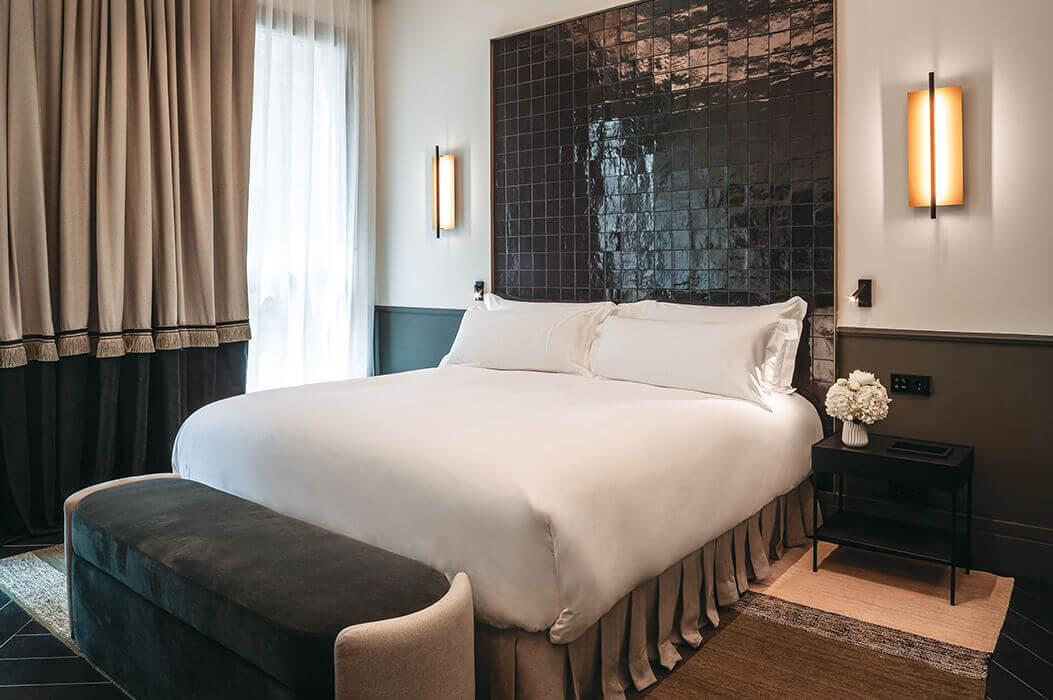
Those founding hoteliers understood that strength could come from shared marketing, distribution and sales power, without forcing hotels into a one-size-fits-all identity. “They believed that by partnering, they could create the same kind of strength as the major brands without standardization,” Ueberroth said. “That idea still defines who we are today.”
Over the decades, Preferred expanded its portfolio and geographic reach, growing well beyond its U.S. roots. A pivotal turning point came in the early 2000s, in the aftermath of 9/11, when the travel industry faced sustained disruption.
“At the time, the company was hotel-owned, with the owners themselves as shareholders,” she said. “When the industry was in turmoil, those shareholders were understandably more focused on running their own businesses and hotels.”
That moment opened the door for a new ownership structure, with Ueberroth’s parents, John and Gail Ueberroth, purchased the company.
“My family became involved, and we infused capital into the business and took on majority ownership,” she said. “Today, we own about 97% of the company, while still maintaining independent hotel shareholders who benefit from the company’s growth and success.”
As luxury travel continues to evolve, the company’s founding principles have become increasingly aligned with guest expectations. Today’s luxury traveler is less motivated by opulence and more drawn to authenticity, emotional connection and a sense of place.
“To us, being independent means more than not being part of a major chain,” Ueberroth said. “It’s about distinct style, a strong sense of place and a deep connection to the local community. No two of our hotels are the same, and that individuality is exactly what today’s traveler is seeking.”
The company’s own research underscores that shift. “Our luxury travel research shows that travelers want meaningful experiences and lasting memories—not just beautiful photos,” she said. “They’re looking to feel something different when they leave. Independent hotels excel at storytelling, design and authenticity, and that’s why this segment continues to grow.”
That growth has not gone unnoticed by the major chains, many of which have launched their own soft brands in recent years.
“I’ve always said it’s interesting that the big chains have gotten into our space,” Ueberroth said. “They’ve launched their own versions of it, but it’s not the same. The contracts and rules of engagement are still very chain-like. To me, that was a signal that the independent segment was not only growing—it was here to stay.”
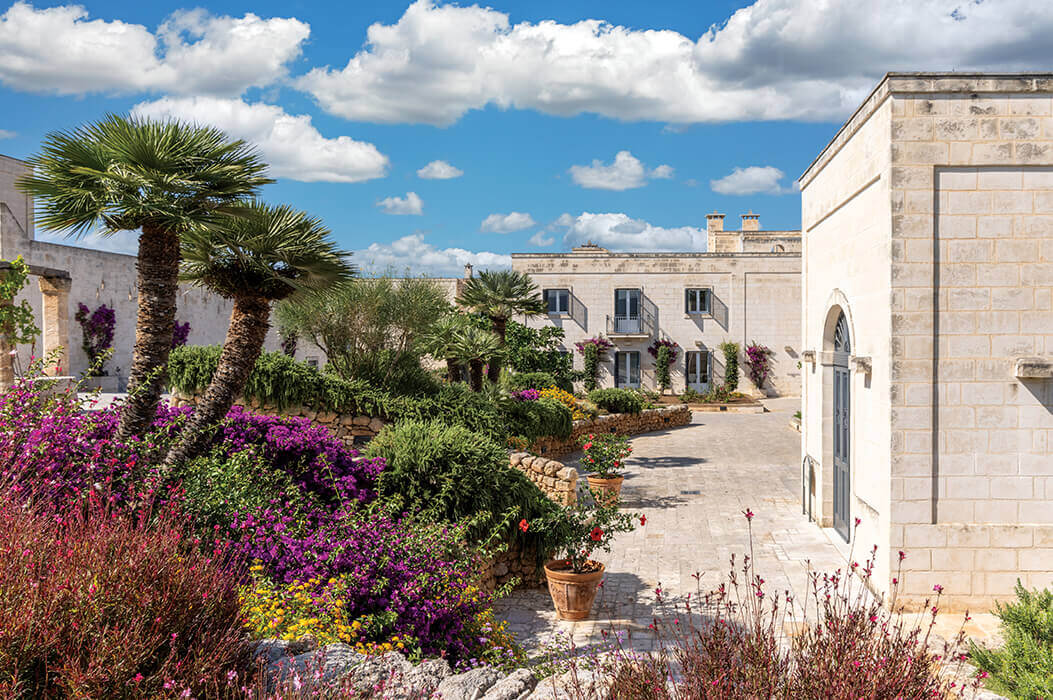

Access and authenticity
The shifting definition of luxury has become a central pillar of the company’s positioning. “Seventy-eight percent of luxury travelers now define luxury by access and authenticity, not opulence,” Ueberroth said. “Two-thirds are looking for hotels that feel distinctive and reflective of local culture rather than interchangeable global brands.”
For owners, that shift creates opportunity—but only if they can access demand at scale.
“We offer the freedom of independence paired with the commercial strength of a global brand,” she said. “For guests, it means access to more than 625 independent luxury hotels worldwide, with the same scale and reach you’d expect from a major chain—but without the rigidity.”
That balance—scale without rigidity—defines Preferred’s owner value proposition. “At a very simple level, we provide independent hotel owners with scale, access and enterprise-level solutions across global sales, marketing, distribution and loyalty,” Ueberroth said. “Our platform includes global group and corporate sales, a robust loyalty program, procurement savings and preferred partnerships that help reduce operating costs.”
Preferred’s alliance program allows hotels to reduce merchant fees, leverage purchasing power and access distribution channels that might otherwise be out of reach.
“We bring the same commercial muscle as the major chains,” she said, “but with significantly more flexibility and a lower overall cost structure. Owners get freedom, supported by real strength and reach.”
Thoughtful growth
Despite its flexibility, Preferred Hotels & Resorts is selective about the hotels it admits. The company’s evaluation process looks well beyond physical attributes.
“Our approach to hotel acceptance is rigorous,” Ueberroth said. “We look first at destination and location, followed by a detailed evaluation of the property itself. Quality of the physical asset is essential, but service and operational excellence are equally important.”
Equally critical is alignment with ownership and leadership. “We want to be confident that we can deliver meaningful business value while partnering with owners who share our standards and vision,” she said.
That selectivity has not slowed momentum. The brand added 79 new hotels over the past year while maintaining a 93% retention rate.
“Retention is one of our most important metrics,” Ueberroth said. “We’re always aiming for 90% or better. In this environment, where there’s a lot of turnover, deeper engagement and long-term partnership really matter.”
Collections and loyalty
Preferred Hotels & Resorts’ portfolio is organized into four collections designed to clarify positioning for both guests and owners: Legend, L.V.X., Lifestyle and Preferred Residences.
“All of them are full-service luxury properties,” she said, “but you’ll see differences in service depth, location and product. That allows us to be very clear about expectations while still preserving individuality.”
The company’s I Prefer Hotel Rewards program has become a critical driver of both guest engagement and owner value.
“Our loyalty program is growing rapidly, now approaching 8 million members,” Ueberroth said. “We added about 800,000 members in 2025 alone.”
But more important than size is behavior. “What we want to see is the guest saying, ‘I loved this experience—where else can I go?’” she said. “That traction is really picking up momentum.”
Cross-brand loyalty has emerged as a powerful indicator of success. “Roughly 40% to 50% of our loyalty guests originated at another hotel in our portfolio,” Ueberroth said. “That’s a huge value driver for owners.”
Peak performance
From a performance standpoint, the company is seeing strong results across multiple regions. “Europe and the Middle East are definitely outperforming right now in terms of rate growth, occupancy and overall demand,” Ueberroth said. “The U.S. has remained strong, but it’s starting to level out as a more mature market.”
Looking ahead, the company is focused on South America and Asia. “In Asia, in particular, we’re seeing strong demand and significant opportunity,” she said. “Demand is outpacing supply, and we’re closely tracking where connectivity is improving, including new airlift into emerging destinations.”
Within Europe, traveler behavior is shifting. “Established markets like Italy continue to perform well, but we’re increasingly seeing interest move into secondary and tertiary destinations,” Ueberroth said. “South America is also seeing renewed momentum, driven by culturally rich destinations and strong value.”

Recent additions illustrate that global focus. “There are several new additions that really stand out,” Ueberroth said. “The Jaffa hotel in Tel Aviv, Israel, is a beautiful Legend Collection hotel and a market we were excited to re-enter.”
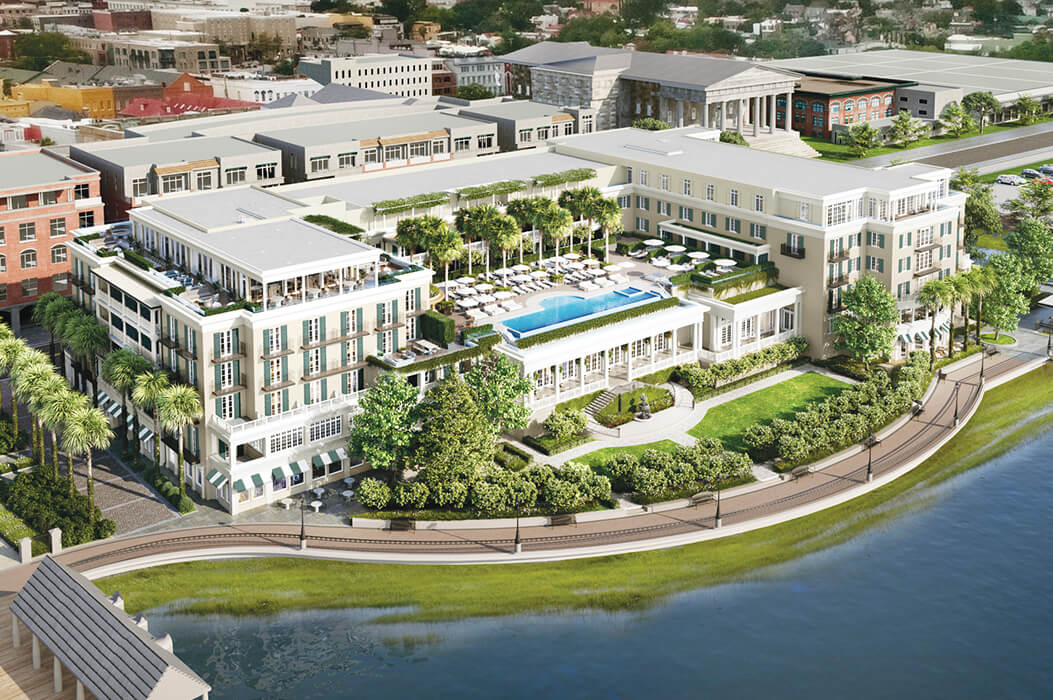
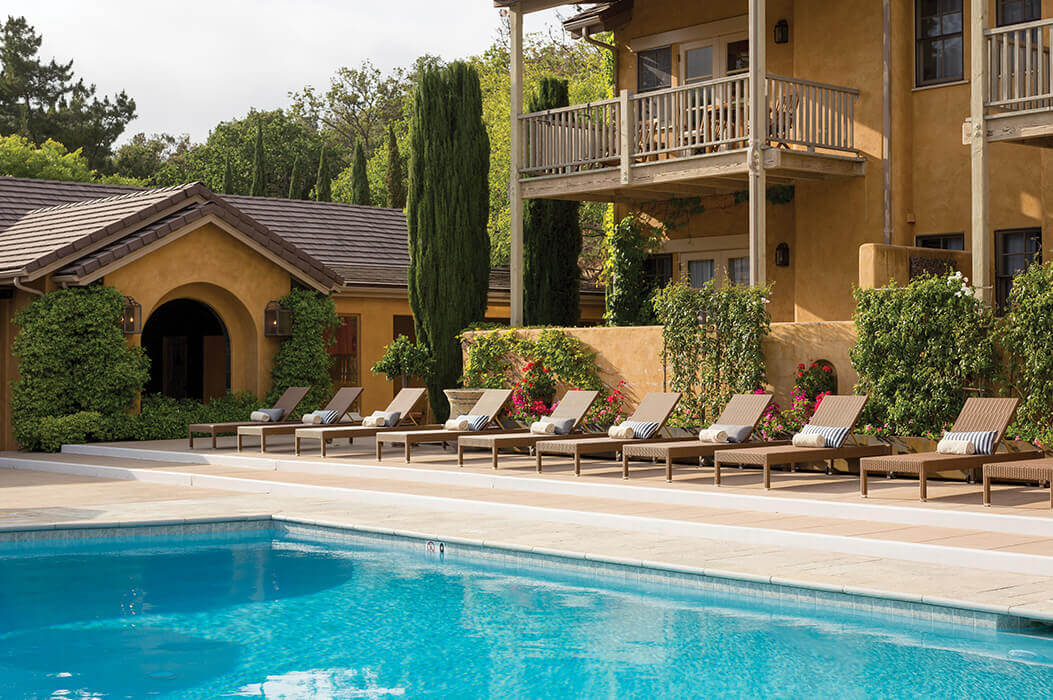
Other notable additions to the portfolio include Masseria San Domenico and Armani Hotel Milano in Italy, Simsara Ubud in Bali, Serras Sevilla in Spain, Bernardus Lodge & Spa on California’s Central Coast and Keswick Hall in Charlottesville, VA. The Cooper in Charleston, SC, which is expected to open in March, will be part of the Legend Collection.
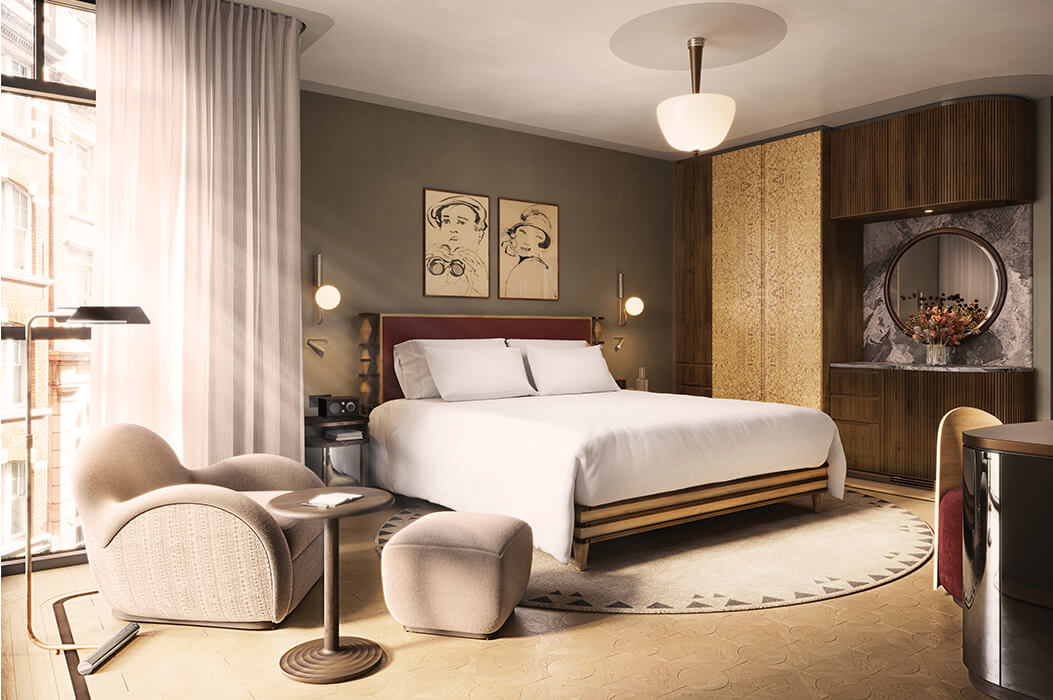
“We’re also excited about new-builds like The Newman in London and a new hotel in Florence,” she said. “These projects reflect our focus on new markets and thoughtfully developed properties.”

Owner alignment
One of Preferred Hotels & Resorts’ most distinctive characteristics is its ownership base.
“One of the most reassuring things for me when visiting our hotels is seeing how involved the owners are,” Ueberroth said. “Many of them personally show up and walk me through the property. That level of commitment creates incredible alignment, because it’s their name on the door.”
Approximately 80% of the company’s hotels are family-owned. “They’re not backed solely by funds,” she said. “There’s a family and a person behind them, and that personal investment aligns very closely with what we stand for as a brand.”
Accountability remains central to the company’s owner relationships. “Our hotel partners absolutely have the right to expect measurable KPIs,” Ueberroth said. “Those KPIs can vary by property, depending on whether the focus is group, leisure, corporate or brand positioning in a new market.”
KPIs are set annually and reviewed quarterly, with an emphasis on incremental value creation.
“At the end of the day, we’re focused on how we add value—shifting business from OTAs to direct channels, driving group demand, expanding corporate accounts and helping hotels access luxury consortia,” she said.
For guests, the promise of Preferred Hotels & Resorts is not just consistency, but emotional connection. “Consistency is critical, but it has to be paired with highly personalized, locally inspired experiences,” Ueberroth said. “Guests expect great beds and beautiful hotels, but what really matters is how they feel when they’re there and the memories they take with them.”
Technology plays a role, but people remain central. “You can implement all the technology you want,” she said. “At the end of the day, it’s the people on property who deliver the experience—the bartender who remembers your cocktail, the server who knows your morning order, the housekeeper who leaves a thoughtful note.”
Looking ahead
Ueberroth’s growth vision for Preferred Hotels & Resorts is clear. “Five years from now, I want us to be the partner of choice for owners, management companies and developers,” she said. “We want to be known as relationship-driven, innovative and best-in-class for independent hotels—helping owners elevate while preserving their freedom.”
Growth will remain thoughtful, not arbitrary. “We’re not growing for growth’s sake,” she said. “We’re a family-owned company with a long-term vision. We’re not trying to sell the business—we’re deeply committed to doing this the right way.”