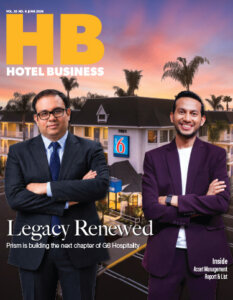
When Prism acquired G6 Hospitality in late 2024, the company wasn’t buying just another hotel brand. It was taking ownership of one of the most recognizable names in American lodging.
For more than 60 years, Motel 6 has been a fixture of the country’s travel landscape. Its roadside signs have welcomed generations of travelers, while its famous promise to “leave the light on for you” helped turn the economy chain into a cultural touchstone. Alongside Studio 6, its extended-stay sister brand, the company built a network of approximately 1,500 hotels across North America and developed one of the largest franchise systems in the economy segment.
For Prism, the acquisition represented an opportunity to combine that legacy with a new generation of technology, distribution and operational tools.
“What drew us was real brand equity, a loyal owner network and a clear opportunity to modernize the infrastructure,” said Ritesh Agarwal, chairperson, G6 Hospitality. “The vision is simple: protect what makes these brands valuable and invest with intention in what makes them more competitive.”
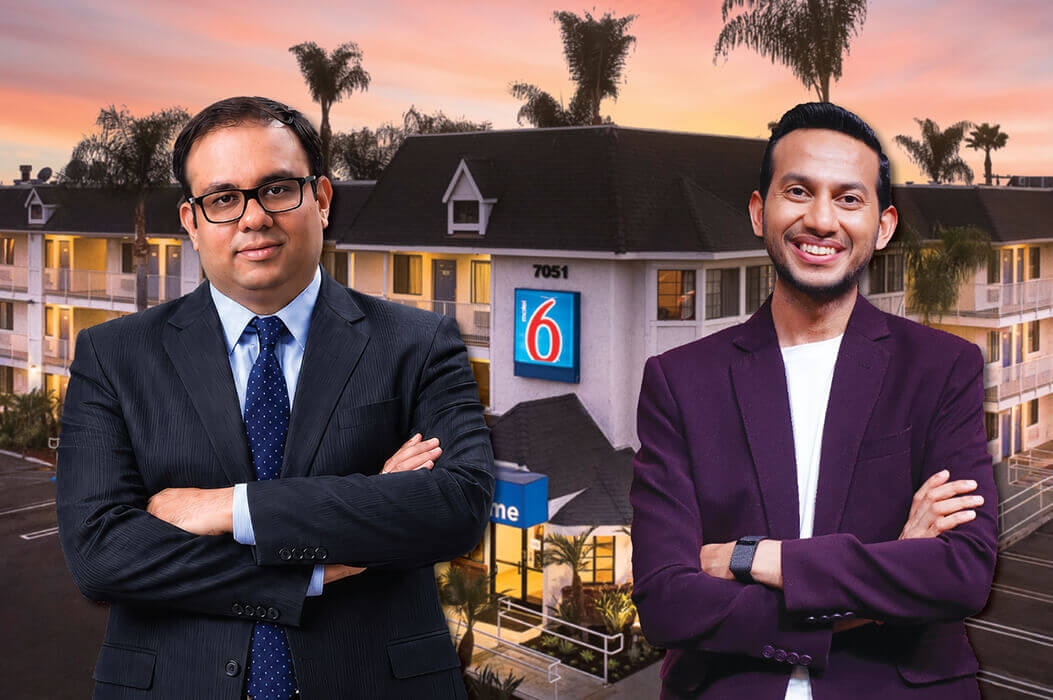
The transaction was particularly significant for Ankit Tandon, vice chairman, G6 Hospitality, who entered the position earlier this year. Long before assuming the role, he helped lead the acquisition itself as global COO of Prism.
He said his involvement in the acquisition gave him an unusually detailed understanding of the business before Prism officially took ownership. That perspective has proven valuable as the company enters what leadership describes as a new phase for the Motel 6 and Studio 6 brands.
Although Tandon was named vice chairman only recently, he spent months after the acquisition traveling throughout the U.S., meeting franchisees, vendors and technology partners to better understand both the strengths of the business and the challenges facing owners.
Those conversations reinforced what Prism had seen during the acquisition process. The company was inheriting a powerful brand with deep owner loyalty, but also one that leadership believed could benefit from modernization.
“We knew it’s a legendary brand,” Tandon said. “There is a lot of loyalty in it, and a lot of passion in the owner community.”
The challenge was not changing what Motel 6 and Studio 6 represented. It was strengthening the systems supporting them.
As Prism evaluated the business, leadership identified several areas where it believed it could make an immediate impact: technology, revenue management, direct booking channels and franchisee support.
“We clearly knew that as a new-generation technology-led business coming in, we could definitely add value to the G6 brand,” Tandon said.
Building the foundation
While many hotel companies talk about technology as a differentiator, Tandon views it through a more practical lens. The objective, he said, is not technology for technology’s sake.
“The guiding principle was that we need to make profitability better and convenience higher for our franchisee owners,” he said.
One of the most visible examples is G6 Marketplace, a procurement platform designed to simplify purchasing and provide franchisees with access to a centralized marketplace for products and services.
“We wanted to get the best vendors with the full assortment of items which are actually used when it comes to operating a G6 asset,” Tandon said.
The marketplace includes everything from daily operating supplies and maintenance products to furniture, upholstery and linens. Owners can compare multiple vendors, evaluate pricing and place orders through a single platform.
The benefits extend beyond convenience. By leveraging the scale of the G6 system, the company can negotiate pricing that many individual owners would struggle to obtain on their own.
At the company’s recent franchise convention in Cancún, Mexico, G6 showcased the platform through a large vendor exhibition featuring approximately 40 suppliers.
Another initiative, G6 Lightspeed, focuses on employee training and development. The platform delivers role-specific learning content intended to help hotel teams onboard more quickly and maintain operational consistency.
Given the ongoing labor challenges facing the hospitality industry, leadership sees training as an increasingly important competitive advantage.
“For a network of our scale, ensuring that every team member is trained is important,” Agarwal said.
Tandon noted that employee turnover remains a reality throughout the industry, making accessible training tools particularly valuable.
The company has also introduced technology focused on safety and risk management.
Through a partnership with Protect24.ai, franchisees receive early visibility into potential safety concerns, suspicious activity and reputational risks that may affect their properties.
According to Tandon, the objective is to help owners identify issues before they become larger problems. “Our entire effort through technology or through this partnership with Protect24.ai is basically to do early warning to our partners.”
Agarwal sees particular value in helping owners shift from reacting to problems after they occur to identifying risks before they escalate. “For owners in communities where these risks are more acute, that shift from reactive to proactive is meaningful,” he said.
Yet, perhaps, no technology initiative has generated more attention from owners than the company’s growing focus on revenue management.
According to Tandon, one of the clearest lessons from the company’s first year and a half of ownership has been the impact of pricing and revenue optimization.
He said franchisees participating in managed revenue programs have consistently outperformed comparable properties, leading the company to develop additional tools that can extend those benefits across a larger portion of the network. The result is a recommended pricing platform designed to provide owners with data-driven guidance while preserving their ability to make final decisions.
“We use our technology at the back end to look at what the competitive pricing is, what’s happening in the market and what’s happening in the macro environment,” Tandon said.
The owner retains full control, he added, but gains access to better information.
The company believes those efforts are already translating into measurable performance. “Our year-over-year G6 RevPAR growth has constantly beaten the economy market,” Tandon said.
For leadership, those results provide validation that the company’s investments are beginning to produce tangible benefits for owners.

Strengthening direct connections
While technology investments have focused heavily on helping owners operate more effectively, leadership also identified another opportunity shortly after acquiring the company: strengthening direct relationships with guests.
When evaluating G6 prior to the acquisition, Tandon said direct booking channels represented a relatively small portion of overall demand. That created an opening to reduce distribution costs, improve owner economics and build stronger connections with travelers.
“We clearly felt that was a great opportunity where we could add value once we acquired the company,” said Tandon. “We can build the direct demand channels, which obviously means lower cost of distribution for our franchisees and also in a way more revenue for them.”
At the center of that effort is the My6 mobile application, which has become one of the company’s most important strategic assets. The app recently surpassed one million downloads, a milestone both Tandon and Agarwal point to as evidence of growing guest engagement.
The app serves several purposes. It gives guests a direct booking channel, provides access to promotions and allows the company to maintain an ongoing relationship with travelers. It also creates opportunities to introduce new features that improve the guest experience.
Among those features is bookable early check-in, an enhancement Agarwal said was developed directly from guest feedback.
For franchisees, the value of direct bookings is straightforward. “When a guest books directly, the economics are better for the owner and the experience is more personalized,” Agarwal said.
Tandon said growth through the app and direct channels has significantly improved performance for owners across the network.
“The My6 app has seen massive growth just in the 18 months of ownership,” he said. “This sort of direct demand which the My6 app is able to generate, along with the web direct demand, is making the cost of distribution lower for our franchisees, and it’s helping them tremendously.”
The company views direct bookings as more than simply a revenue strategy. Leadership believes the ability to build direct relationships with guests creates a foundation for future growth, particularly as consumer expectations continue to evolve.
New marketing approach
Modernizing a 60-year-old brand requires more than operational improvements. It also requires ensuring travelers continue to see and engage with the brand in an increasingly fragmented media environment.
For G6, that has meant significantly increasing marketing investment while simultaneously rethinking how those dollars are deployed.
According to Tandon, marketing spending during the first quarter of 2026 was approximately two and a half times higher than during the same period a year earlier.
“We have started using all the social networks, including Instagram and Facebook, and also definitely on Google and Gen AI platforms,” Tandon said.
The results, he noted, have been encouraging. Recent campaigns generated millions of views and reached large audiences across social platforms.
Yet leadership is not pursuing a purely digital strategy. Instead, the company is attempting to balance local and national marketing efforts, recognizing that both play important roles in driving demand.
National partnerships have become an increasingly visible component of that strategy. Among the company’s most prominent initiatives has been its involvement with the NBA, a partnership designed to increase brand visibility and connect with travelers across a broad audience.
The company is also positioning itself around several major events expected to generate significant travel demand in the coming years. They include the 2026 FIFA World Cup, the 2028 Olympic Games in Los Angeles and celebrations connected to the nation’s 250th anniversary.
“We clearly have a plan and a strategy to make sure that G6 markets itself at a national level around these events,” Tandon said.
At the local level, however, the strategy becomes more targeted. Leadership increasingly views AI as a tool that can help create customized marketing campaigns tailored to individual properties and local demand patterns.
“We run so many marketing campaigns and performance marketing campaigns for our properties that a lot of our marketing creatives are now being generated through AI technology,” Tandon said.
The technology enables the company to create localized content more efficiently while reducing production costs and accelerating deployment.
According to Tandon, the result is the ability to deliver marketing that feels increasingly personalized. “It’s almost like a personalized marketing campaign for every single property,” he said.
The approach reflects a broader theme that runs throughout G6’s strategy. Rather than relying exclusively on traditional brand advertising, the company is increasingly focused on measurable initiatives that can drive bookings and support owner profitability.
That emphasis on economics also helps explain one of the company’s biggest growth priorities: extended-stay.

Betting on extended-stay
Few segments of the lodging industry have attracted as much attention in recent years as extended-stay.
For G6 Hospitality, the category represents more than a growth opportunity. Leadership views it as one of the most important drivers of the company’s future.
“The first opportunity is extended-stay,” Agarwal said. “Construction workers, traveling healthcare workers, professionals relocating: these guests do not cancel when consumer sentiment softens. That segment is durable in a way that pure leisure is not,” Agarwal said.
Tandon shares that view. According to him, extended-stay has consistently outperformed many other lodging categories, both within the G6 system and across the broader industry. “What we have seen is that long stay as a segment is the one which is basically seeing the highest growth in RevPAR,” he said.
The company also identified what it believes is a gap in the market between traditional economy lodging and higher-priced extended-stay products.
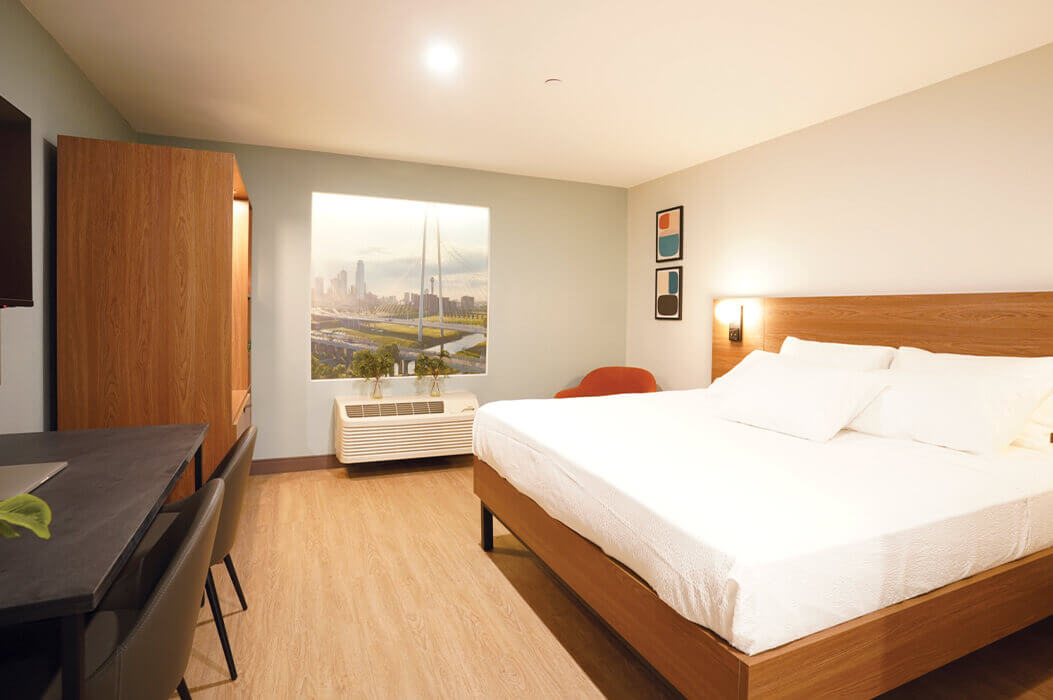
That gap ultimately led to the creation of Studio 6 Plus, a new-construction extended-stay brand unveiled during the company’s franchise convention in Cancún. For leadership, the new brand represents the next evolution of the Studio 6 platform.
“The market for quality extended-stay options at accessible price points is genuinely undersupplied,” said Agarwal, describing the brand as “the most ambitious expression” of the company’s commitment to the segment.
One of the most notable aspects of the launch was the immediate response from developers. Before the brand had formally launched, Natson Hotel Group committed to developing 18 Studio 6 Plus properties.
“That kind of early owner conviction is the most honest signal we could ask for,” Agarwal said.
Leadership believes the concept’s economics will also resonate with franchisees. Tandon noted that Studio 6 Plus was designed to be efficient both to build and operate, with technology playing a significant role in reducing operating costs.
The company has also structured fees differently than many traditional franchise offerings. Agarwal emphasized that owners are charged only for demand generated directly by the brand.
“We are aligning our incentives with owner profitability, not just volume,” he said.
As interest in the concept grows, G6 has been conducting meetings and presentations with prospective developers across the country. According to Tandon, enthusiasm has been strong. “We have been seeing great excitement from various owners about this new product,” he said.

Franchisee engagement
If technology and new brands define the growth strategy, leadership says franchisee engagement is what holds the system together day to day.
Since the acquisition, G6 has increased the frequency and intensity of owner touchpoints, shifting toward a more continuous feedback loop rather than periodic check-ins. That has included nationwide property visits and town halls that bring leadership directly into markets across the U.S.
“We have put significant effort into listening,” Tandon said.
He said the goal is not just communication but accountability, with clearer ownership of issues as they move through the organization.
“We have made improvements on how support works, with clearer escalation paths, defined timelines and named contacts at each stage so an owner always knows who is handling their issue,” he said.
Franchisees, he added, are primarily asking for speed and clarity. “Our owners want accountability, visibility and timely support and that is what we strive to do better,” he said.
The company’s franchise conference in Cancún marked the largest gathering in G6’s history and a symbolic moment for the newly integrated organization. It was the first time the full ecosystem of franchisees, vendors and corporate teams came together under the current ownership structure.
“We had been doing foundational work since the acquisition,” Agarwal said. “Cancún was the moment we brought our whole community together, franchisees, vendor partners and teams. We wanted to share what we have built, where we are going and what we are committing to in the coming years.”
The scale of the event underscored how central the franchise network is to the business. More than 1,200 franchise partners attended, many accompanied by family members, alongside vendors, speakers and corporate staff.
What stood out most for leadership was not just attendance but engagement. “What stayed with me most was the energy in that room,” Agarwal said. “This is a community of people who have built real businesses and chosen to do it together with us.”
A key feature of the conference was the launch of the My6 Lounge, a centralized hub where franchisees could interact directly with corporate teams across functions including finance, marketing, sales and legal. The setup was designed to remove layers of escalation and allow owners to resolve issues in real time.
“We had people from all departments there,” Tandon said. “Finance, marketing, business development, sales, HR, legal. People came in with questions, suggestions and concerns, and they could directly talk to the brand.”
For leadership, the value was not only operational efficiency but transparency. “It was an extremely transparent environment where they could come in and directly talk to the brand and get their problems logged in,” he said.
Looking ahead
Agarwal said the focus remains on strengthening the fundamentals of the brand while investing in areas that improve both owner economics and guest experience. “The vision is simple: protect what makes these brands valuable and invest with intention in what makes them more competitive.”
The G6 chairperson added that economy hospitality remains an often misunderstood segment of the industry. “Economy hospitality is not the low end of the market—it is the honest end of the market,” he said.
For Tandon, momentum is already visible in performance metrics, franchise development and new construction activity. He pointed to continued RevPAR growth that has outperformed the broader economy segment and growing interest in both conversions and new builds.
That performance, combined with interest in Studio 6 Plus and increased franchise engagement, is shaping how leadership views the company’s next phase of growth.
“We are seeing a lot of referrals come through our existing owners,” Tandon said. “We are seeing pickup of Studio 6 Plus and we are also seeing people coming out from competing brands and asking to convert into G6.”
He emphasized that growth will be deliberate rather than rapid expansion for its own sake. “It’s not that miracles will happen and suddenly the 1,500 franchisees will become 3,000 in a year,” he said. “But we are confident we will continue to grow actively.”
For Agarwal, the broader ambition is about consistency and trust. “We want Motel 6 and Studio 6 to be the clearest example of a well-run economy franchise network,” he said.
And for a brand built on a promise as simple and enduring as “We’ll leave the light on for you,” leadership says the next chapter is about ensuring that promise feels more relevant, more connected and more consistent than ever.
After the issue went to press, G6 announced new leadership in North America. Check it out here: G6 Hospitality names new U.S. leadership