



The 2026 FIFA World Cup is not merely a sporting event; it is a seismic shift for the North American hospitality landscape. With 48 teams, 104 matches and 16 host cities spread across the U.S., Canada and Mexico, the scale of this tournament is entirely unprecedented in the history of the region.
For hotel owners and management companies, the event represents a golden opportunity to showcase the very best of American hospitality to a global audience. However, the path to increased revenue is paved with logistical hurdles, shifting traveler behaviors and complex strategic choices. As the industry marches toward the June 11 kickoff, the prevailing sentiment among top executives is one of cautious optimism.
While the potential for record-breaking ADR growth is undeniable, warning signs—including significant visa barriers, a projected softening of inbound travel in 2025 and the delicate risk of displacing loyal year-round business—require a tactical playbook that is as agile as it is disciplined.
Moment of magnitude
The sheer size of the 2026 tournament dwarfs any previous mega-event held on U.S. soil. Carlos Rodriguez Sr., executive chairman, Driftwood Capital, said that the World Cup’s impact will be far more significant than the Super Bowl.
“It’s huge, and that goes for many ways,” he noted. “One is obviously millions of people that will come to see it and enjoy it, and they’ll be staying for a month and a half. You think the Super Bowl is big? Super Bowl is nothing compared to the World Cup. You need to grab a Super Bowl and multiply it times 10 or 15 to get to the World Cup.”
In many countries, Rodriguez added, “soccer is like a religion,” ensuring a month and a half of a sustained celebratory atmosphere.
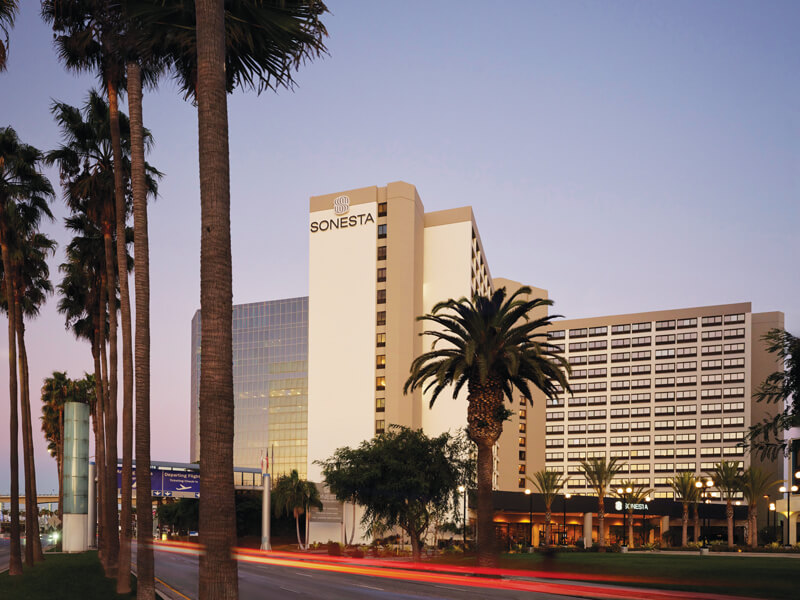
Chris Trick, chief marketing and performance officer, Sonesta International Hotels Corporation, shared this bullish outlook, observing that the World Cup will likely “bust through” current industry headwinds like political tensions and visa challenges.
He compared the upcoming surge to the impact of the Taylor Swift Eras Tour, but on a much larger scale. “There have been so many stories about the impact she’s had on the economy, particularly hotels,” he said. “It was like a $5-billion economic impact. Well, the World Cup is multiples of that. They’re projecting in the U.S. alone $30.5 billion of economic impact.”
Trick believes the data confirms this will be the largest sporting event in history.
This massive scale presents a unique challenge for hoteliers who typically rely on historical data to set their strategies. Hunter Webster, division VP, revenue strategy, Aimbridge Hospitality, warned that “the biggest challenge overall is that there is really no comparable event in U.S. history. This is the first time a 48-team World Cup has been held, and the first time anything of this scale has happened on U.S. soil. We can’t rely on historical data to predict patterns with certainty.”
The revenue strategy
Data from SiteMinder and Lighthouse indicates that the U.S. market is currently experiencing a rate-led event. Forward hotel booking volumes have more than doubled in areas surrounding high-profile fixtures compared to the previous year. For instance, booking volumes for the U.S.’ opening match against Paraguay in Los Angeles as of Dec. 12 were up 80.5%, with ADR increasing by 21.4%. Hotels in Dallas were seeing reservation volumes grow by 113.6% ahead of the England vs. Croatia match.
Webster highlighted that Aimbridge expects transient demand to represent 75%-80% of total traffic, driven by international fans, media and last-minute bookings. He believes that while “the offset by the influx of FIFA-related demand protects occupancy loss risk, it introduces uncertainty in some ambitious occupancy growth projections. However, rate pressure given the concentrated booking window and nature of demand is expected to result in meaningful ADR growth.”
Jan D. Freitag, national director, hospitality analytics, CoStar Group, agrees that the event will be defined by rate increases rather than just raw volume. He suggests that meeting planners are already being displaced because they “don’t want to compete with all these leisure travelers” and will seek markets that are not hosts.

Daniel Lock, VP, commercial strategy, Hospitality America, anticipates that the compression will spike around match dates rather than being a constant 30-day high-volume period.
“The demand that we’ll see over those days definitely will drive ADR significantly higher than what we would see for even just a high-demand concert,” he said.
The data supports these projections: For the World Cup Final at MetLife Stadium in New Jersey, rates increased by 72.42% year-over-year, while booking volumes for that week climbed by 102.1%. Across all U.S. host cities, ADR was up an average of 55%, with New York City leading at $583 per night.
Tactical marketing
Hoteliers are moving beyond generic promotions, deploying precise, tiered marketing strategies to capture various segments of the population.
Aimbridge Hospitality’s effort is managed through its in-house agency, Second Wave, which mandates specific tactical actions starting three months out. “Social media is a major focus,” said Webster. “We want our hotels to create connections with local events and engage in authentic storytelling around this historic occasion.”
He added that hotels are being encouraged to get active in their local communities through convention and visitors bureau (CVB) partnerships, watch parties and other events to maximize visibility.
Wyndham Hotels & Resorts is utilizing its massive scale to drive “loyalty-first” engagement, according to Mike Shiwdin, group VP, loyalty and guest engagement. “For our strategy leading up to the World Cup, we know that your planning stage to travel is really early engagement.”
The company is investing in communication through its app, SMS and paid media channels to inspire multi-destination trips.
“Between now and the start of the World Cup, we’ll have a series of campaigns that not just showcases host cities, but also all that our surrounding cities have to offer,” he said.
Hospitality America’s approach involves an “omni-strategy” to align messaging with local contingencies like the FIFA World Cup Kansas City organization. “Now would be a good time for hotels to make sure they have local language sites for the countries that are going to be visiting their cities,” said Lock. “We need to make sure that our booking.com sites have local language sites.”
Lock’s team is also focusing on “geo-targeting strategies in order to make sure that our hotels are featuring in inquiries around the stadiums or the fan functions.”
Sonesta is also leveraging high-profile digital partnerships. “We’ve got a strategic partnership with Tripadvisor,” said Trick. “We’re going to be a hotel sponsor of their World Cup site. We’ve also got a site partnership with Expedia.”
These sponsorships allow Sonesta to be visible where travelers are already planning their itineraries. Trick also noted that social media and display ads will be “themed around the World Cup, families traveling together, sports and things like that to create stickiness.”

The defensive line
While the influx of fans is a boon, it brings the challenge of displacement—the loss of traditional corporate and leisure travelers who avoid host cities due to high costs and crowds. Webster highlighted the risk of filling inventory too early with lower-rated wholesale business.
“It’s tempting to commit inventory early, but if properties fill up too soon with wholesale or lower-rated business, they’ll miss opportunities for higher-end transient demand and more lucrative corporate bookings,” he said.
He stressed that “maintaining disciplined inventory management is crucial. If downtown event group blocks hold firm and supply doesn’t experience major slippage, all properties benefit.”
To manage this, many hotels are implementing strict inventory management, including minimum length-of-stay (LOS) requirements and non-refundable prepayment policies. Lock noted that finding a fair, balanced approach to revenue is critical to avoid alienating fans.
“We certainly want to attract guests that are staying for a longer length of stay, and that’s where the opportunity is,” he said. “If we’re going to try to find like equity in travel, it’s that we are not pricing every single day as if it’s a peak period just because the events are occurring over a longer span of time.”
Mathew Zein, journalist/communication expert, OysterLink, warned that excessive minimum-stay requirements could backfire, as “someone might be just interested in attending one match in the U.S., and then they want to go to Canada or Mexico for another match. You have a unique segment of traveler. These are football fans, and you must adjust to their interests.” He suggested that hoteliers “keep an eye, probably daily, on what’s happening and be very flexible. If you need to lower your pricing, do it.”
Yellow card
Despite the optimism, some data points serve as a warning sign. OysterLink reported that inbound travel to the U.S. was projected to drop 6.3% in 2025, falling from 72.4 million to 67.9 million arrivals. This softening, combined with a $250 visa integrity fee and long wait times for visas in markets like Brazil, India and China, could limit the share of the economic windfall for the U.S.
Zein warned that fans may opt for Canada or Mexico, where entry rules are more flexible and ADR growth is surging at even higher rates—up 92% in Canada and 114% in Mexico. He believes the drop in arrivals is a “big warning sign that something needs to be addressed.”
He added, “A lot of fans will just decide to go there instead of going to the U.S. if they believe that the U.S. is going to be too expensive. And they have, on top of that, the visa hurdles.”
He pointed to the last World Cup in Qatar as a case study: “The pricing was so high, and then Dubai showed up, and people were booking in Dubai because it was much more affordable.”
Wyndham’s Shiwdin agreed that logistics are the primary headwind. “Visa travel logistics are probably going to be the biggest travel challenge for the international fans,” he said. “The great USA Coalition and the advocacy of modern visa and entry systems, as well as airport upgrades and next-gen security, are going to be really important for safe, seamless travel.”
Freitag also pointed to the sheer geography of the North American event as a complication. “It is a little different from prior World Cups, just because it’s geographically so disparate,” he said. “The distance between Vancouver and Miami is pretty large vs. what you had at Qatar, where you could just basically walk from venue to venue.”
Market nuance
While ADR is high, industry data revealed a distinct wait-and-see approach from fans. OysterLink reported that occupancy for World Cup dates remained in single digits in many host cities before the match schedule release and ticket draws. Webster noted that hoteliers had to react quickly to early demand booking trends using business analytics to monitor these evolving patterns in real-time.
The impact is also highly concentrated around specific fixture heat maps. Dallas, for example, is hosting nine matches—the most of any city—and reservation volumes are already surging by 113.6%. This is joined by non-fan demand, such as the thousands of media and broadcast staff who will use cities like Dallas as a central hub.
Sonesta’s Trick noted that specific host cities—such as Atlanta (Spain), Los Angeles. (U.S.) and New York (Brazil, Germany, France)—will see massive traveling contingents from global soccer powerhouses and one of the host teams.
Property activations
To capitalize on the event, hoteliers are looking beyond room revenue and focusing on ancillary revenue through F&B, watch parties and cultural tailoring.

Carlos Rodriguez Jr., CEO, Driftwood, said it is important to cater to specific fan preferences. “They each have their own tastes and preferences, especially related to F&B setup,” he said. “We want to cater to that. Miami is hosting Uruguay twice. So, we’re talking about later dinners, maybe with more focus on steak on the menu.”
He added that the Driftwood team is considering details down to the ham and cheese for breakfast for Portuguese guests or sashimi for Japanese travelers. “It’s a fun moment for the staff to execute on and bring their creativity,” he said.
Alinio Azevedo, managing director, luxury and lifestyle, Driftwood, offered a creative approach to language barriers: leveraging staff from across the company’s 90-property portfolio to serve as translators.
“It is really comforting for you to see an actual human speaking in your native language,” he said. “That is an element where I think technology helps but really can’t substitute.”
Shiwdin sees the World Cup as an opportunity to turn a one-time stay into a long-term loyalty relationship. “The gold star for a hotelier is to be associated with a memorable moment for a guest,” he said. “What better opportunity for our hotels and our franchisees to be associated with an event that comes back to their market maybe once every couple decades.”

Wyndham is working with franchisees on property activations like watch parties.
“You don’t necessarily have to be an avid sports fan to want to be part of the activities and festivities,” Shiwdin explained.
Aimbridge’s playbook includes creating fan zones and social-media-ready spaces to engage guests. “Pre-arrival messaging is particularly important,” said Webster. “We want guests to know what events and experiences await them before they arrive, and we’ll use that opportunity to offer upgrades and special packages.”
He noted that properties located close to venues will also benefit from high foot traffic to drive restaurant and bar sales.
Spillover effect
The impact of the World Cup will extend far beyond the U.S. host cities. Wyndham has hundreds of branded hotels within host cities, but more than 1,000 properties within a 50-to-60-mile radius, catering to value-conscious travelers.
Hospitality America’s Lock sees secondary markets like Greenville, SC, as prime candidates for spillover demand from Atlanta.
“As long as you can present the experiential side of it, and you’re aligning your experience as a secondary and tertiary market with the World Cup, I think you’re going to be able to bake in some additional demand that you otherwise are not going to see because the proximity isn’t aligned with where the events are,” he noted.
Trick expects the spillover effect to reach leisure hubs like Orlando and Las Vegas. “Most Europeans get a month off in the middle of the summer,” he said. “So, these folks are going to be here for a long period of time. And I would bet they’re going to go to Orlando and Vegas and many of these other markets.”
Azevedo explained that immigrant communities within the U.S. will drive domestic travel, giving them the chance to experience other parts of the country.
Rodriguez Jr. also highlighted the role of lifestyle and full-service hotels in capturing specific business. “We have extended-stay product that’s attractive for a certain fan base… also some of the support staff broadcasting FIFA, and other organizational groups that are going to be here before and after the games—we’re going to be looking to target them.”
He pointed out that properties like Driftwood’s Canopy hotel in West Palm Beach, while outside the core hub of Miami, will be a “benefactor for those maybe wanting to get away from the craziness.”
Tactical advantage
Hoteliers are turning to advanced business intelligence tools to monitor trends in real-time. Aimbridge uses a proprietary analytics tool that provides real-time visibility into booking activity, rate positioning and week-over-week changes. “It allows us to react quickly when we see market trends developing—something we’ve never been able to do at this scale before,” said Webster.

Aimbridge properties also utilize AI-powered tools from Second Wave to help hotels understand website traffic, analyze marketing effectiveness and monitor competitor activity.
Wyndham is using digital engagement tools like Wyndham Connect to manage guest expectations and offer upsells. “The app can be a tremendous opportunity to create that translation connection, and leveraging the language translations on our app, email, SMS to really foster the cultural breadth and assist our franchisees in any limitations they may have on property as well,” said Shiwdin.
Lock also stressed the need for local language optimization on booking sites. “We need to make sure that our booking.com sites have local language sites that are travel ads optimized for local language, as well.”
Operational readiness
Preparing staff to handle an influx of diverse cultures is a priority across the board. Lock said Hospitality America is arming its teams with technology like Google Translate to ensure guest expectations are met.
Shiwdin said that Wyndham has “talked to our teams to make sure that staffing is a consideration from a schedule standpoint, not necessarily looking to hire that new skill set, but I think it’s an important consideration when you go back to the cultural diversity that in some of these markets may not have experienced that breadth before.”
Driftwood’s Azevedo takes a more proactive stance on utilizing human capital, suggesting that hotels “look into the language skills of our staff” across properties. “Let’s look at not just the staffing that hotel but staffing within our broader 90-property portfolio,” he said. “We may have someone who speaks Arabic who will help accelerate and facilitate communication.”
Aimbridge’s operational plan focuses on property standards. “We’re focusing on clear signage, comprehensive employee communication and impeccable property standards—cleanliness, lighting, HVAC functionality,” said Webster, adding that the company is also “careful to maintain strict adherence to FIFA trademark and logo usage guidelines” to protect owners and brand integrity.
The final whistle
Beyond immediate revenue, the industry views the World Cup as a chance to reset the global image of North America. Rodriguez Sr. believes the goodwill generated by the tournament will drive demand for years. “It will be a great way for people to reacquaint themselves with us,” he said. “It’s not just the event. It’s the event plus the goodwill it generates toward the future. If we don’t create goodwill, that’s a tremendously missed opportunity.”
He noted the power of global TV. “Billions of people are watching games in our country,” he said. “If we don’t do a good job, we’re missing a hell of an opportunity.”
Azevedo called it a “golden opportunity” to remessage the country’s hospitality and “showcase the best that this country has to offer, because that’s what those events generally do. It is an opportunity to showcase to the world what the destination is.”
He pointed to Barcelona hosting the Olympics in 1992 as a moment of transformation that put the city on the tourist map.
The consensus remains clear: Success in 2026 will not be a slam dunk unless hoteliers remain flexible and data-driven.
“Unless they’re flexible, hoteliers might lose the opportunity,” said Zein. “They have to be agile and flexible at any point and be ready to change things according to what’s happening.”
Freitag said it ultimately comes back to the value equation. “Customers expect to pay higher rates,” he said. “It’s about figuring out what’s the best value that you can provide to the customer.”
Shiwdin said that ultimately, the gold star is associated with a memorable moment, which “will not just drive that nostalgia but also allow our guests to become billboards for Wyndham Rewards and the broader portfolio at large.”
Trick summarized the situation by saying, “The world is due to arrive on the doorstep of hotels, and hotels that are preparing early are capturing the most demand.”
While the opening whistle does not happen until June 11, the hospitality players are already on the pitch.
The host lineup
| United States (11 cities) | |
| The U.S. will host most of the fixtures, including the final in New Jersey and the semifinals in Dallas and Atlanta. | |
| • Atlanta (Mercedes-Benz Stadium) | |
| • Boston (Gillette Stadium) | |
| • Dallas (AT&T Stadium) | |
| • Houston (NRG Stadium) | |
| • Kansas City, MO (Arrowhead Stadium) | |
| • Los Angeles (SoFi Stadium) | |
| • Miami (Hard Rock Stadium) | |
| • New York / New Jersey (MetLife Stadium) | |
| • Philadelphia (Lincoln Financial Field) | |
| • San Francisco/Bay Area, CA (Levi’s Stadium) | |
| • Seattle (Lumen Field) | |
| Mexico (3 cities) | |
| Mexico will make history as the first country to host the men’s FIFA World Cup three times. | |
| • Guadalajara (Estadio Akron) | |
| • Mexico City (Estadio Azteca) | |
| • Monterrey (Estadio BBVA) | |
| Canada (2 cities) | |
| This marks the first time Canada will host matches for the men’s FIFA World Cup. | |
| • Toronto (BMO Field) | |
| • Vancouver (BC Place) | |
