

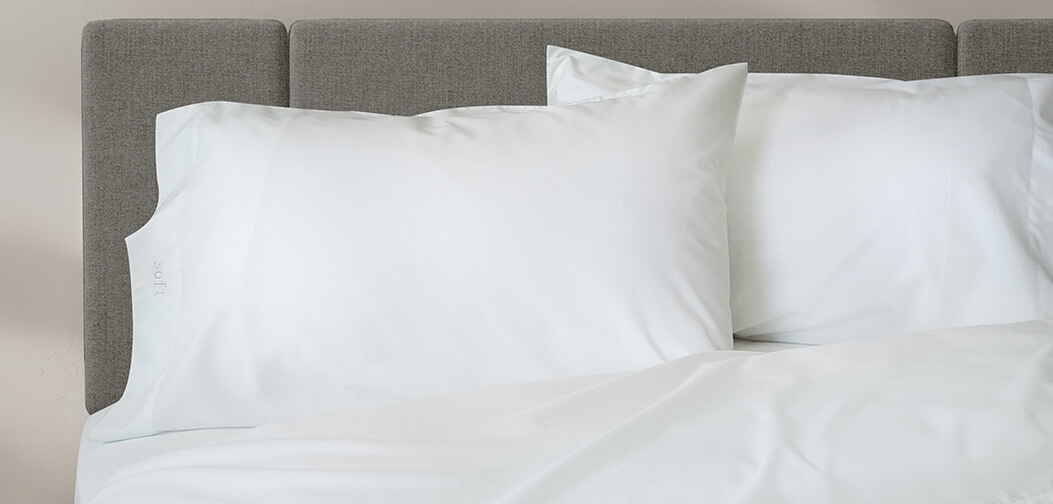
Sustainability is increasingly driving innovation in hospitality textiles, and Bokser’s newly launched Vermilion Collection reflects how far the category has evolved.
Designed exclusively for hotel use, the certified carbon-neutral sheeting program is the result of years of development and underscores the company’s commitment to combining performance, durability and environmental responsibility at scale.

Bokser
A Minneapolis-based textiles design firm, manufacturer, supplier and distributor, Bokser opened its doors in 2018 as a direct-to-consumer brand before entering hospitality in 2020. Ed Guzek, founder/president/CEO, brings more than a decade of category experience to the business, having spent 15 years at Target, where he ultimately led the retailer’s bedding division.
“I was responsible for textiles, kids’ home and then all of the bedding components,” he said. “I had top-of-bed, sheeting and filled goods. I’ve been around this category for a very long time.”
That deep category knowledge informs Bokser’s sustainability strategy, which Guzek describes as intentional rather than reactive.
“Sustainability is something that is incredibly important to me as an individual,” he said. “So, being the leader of Bokser, my interest in sustainability and making the world a better place from how we use it flows into the company on a daily basis.”
He added that sustainability is one of the company’s four core values and is considered at the earliest stages of product development. “It’s not something that comes at the end where we’re like, ‘Well, is this sustainable or can it be sustainable?’ We design into our sustainability practices.”
The Vermilion Collection aligns directly with Bokser’s three sustainability priorities: carbon emissions reduction, the elimination of virgin plastics and circularity. While circularity initiatives are still in development, Vermilion delivers immediate impact across the first two goals. The collection is certified carbon neutral through Climate Impact Partners, beginning with the factory itself. “We worked with them to have our factory certified,” Guzek explained. “What makes it carbon neutral is that the factory is powered by renewable energy.”
The manufacturing facility, he said, operates with two solar farms—one on the factory roof and another adjacent to the site. “We generate more electricity with those two solar farms than the factory needs, so we actually sell more to the grid than we even need,” he said. “That makes it so we’re not pulling in any sort of power into the factory.”
Water stewardship is another critical component of the program. The factory is certified zero liquid discharge and is not connected to a municipal water supply. “When the factory was built, we dug a lagoon behind it that captures rainwater,” Guzek said. “The rain is captured in the lagoon; we pull the water in to do the processing that we need to do at the factory level; and then whatever remains either goes back into the lagoon or evaporates.”
He stressed the environmental significance of this approach, noting, “We’re not pulling water from a local water supply and, most importantly, we are not discharging any post-processing liquids into any local water supply.”
From a materials standpoint, Vermilion eliminates virgin polyester entirely. The fabric is a poly-modal blend, with the polyester component sourced from recycled materials and enhanced with CiCLO technology, a fiber innovation from Intrinsic Advanced Materials that allows synthetic textiles to biodegrade when they enter the environment.
Gozek noted that the first Bokser product to use CiCLO technology was the Shoreline Collection of top sheets that were rolled out to select Glō by Best Western hotels early last year.
“The Vermilion Collection is the first bed sheeting program for the hospitality industry that uses CiCLO technology,” he added.
The Vermilion Collection is currently offered in white and includes standard hotel sizes across flat sheets, fitted sheets and pillowcases. Guzek described the positioning as ideal for the midscale segment, adding, “The fabric is a poly modal, so it is incredibly soft and durable.
IHG Hotels & Resorts in Canada became the first customer to adopt the Vermilion Collection, further validating the program’s relevance to major hotel operators.
While Vermilion is Bokser’s first certified carbon-neutral launch, Guzek noted that it will not be the last. “Our carbon-neutral certification is not limited to this fabric,” he said, pointing to additional constructions already in production at the same facility.
He said that the company offers several other sheeting programs for the hotel industry, adding, “Whether you are a Best Western, an Intercontinental or a Four Seasons hotel, we will have a fabrication that will meet your needs. And that is true for terry and filled goods, as well.”
Looking ahead, Bokser is preparing to expand its sustainability platform through a circularity model targeted for 2026, designed to give end-of-life hospitality textiles a second use rather than sending them to landfills. “I think of a hotel and all the sheets, terry and filled goods that we ship into that one property,” Guzek said. “When the sheeting reaches its end of life, where does it go? What happens to it next?”
Guzek envisions a future defined by circularity, where the relationship between supplier and hotelier doesn’t end at delivery. He describes a potential model reminiscent of the deposit systems used for glass soda bottles in the past.
“I think about it like when you could bring your Coke bottle back to the convenience store and get a nickel in return,” he explained. “What if we can find a model where we ship in new terry and sheeting to these properties, and then we can build a circularity model where we take it back at the end of life, and that property gets a credit?”
