

For much of modern hotel history, food and beverage was treated as an obligation.
It was there because the brand standard required it. It was there because conventions needed banquet space. It was there because guests needed breakfast and maybe a late-night burger. But in many ownership circles, it was not the center of the strategy.
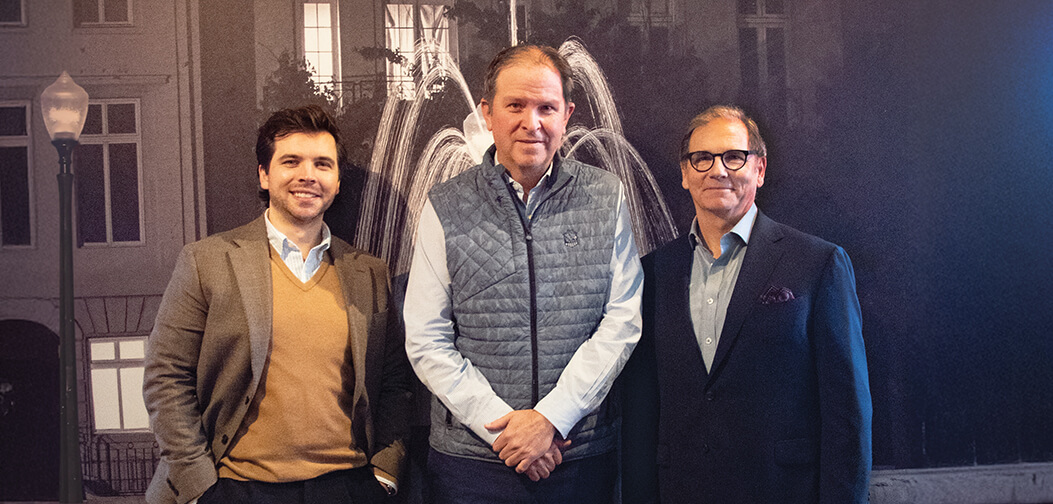
Trip Schneck, who cofounded Colicchio Consulting with Phil Colicchio, remembers that mindset clearly.
“I spent the bulk of my hotel career with a private REIT, Thayer Lodging,” said Schneck. “The focus, at least from an asset management standpoint, was always on the room side. That’s where the margin is and where your profit comes from. And the directive on the F&B side was, ‘Lease it out. Whoever is going to pay the rent will have some sort of food and beverage offering.’”
In that model, the best-case scenario was simple: collect rent, avoid losses and move on. Success was measured in lease terms rather than guest engagement. Restaurants were often treated as tenants rather than strategic partners.
That thinking has shifted dramatically over the past 15 to 20 years. And Schneck believes the industry had little choice.


“We, as an industry, run out of ways to differentiate,” he said. “You used to be able to differentiate on points, price and location. But with brand proliferation and similar service offerings among branded comp sets and similar room amenities, everybody has the same tech package. There’s very little differentiation between the Marriott International service model, the Hilton service model and the IHG Hotels & Resorts model.”
He paused, then added only half-jokingly, “Up until 2015, the biggest differentiator was the curved shower curtain rod. That’s how little innovation had gone on.”
If guestrooms have become increasingly standardized, the battleground has shifted downstairs. Food and beverage, Schneck argued, is the final frontier.
“It’s not just about food and beverage. It’s food, beverage and entertainment. Everything that is going on in a hotel’s F&B program needs to be experiential. If it’s not, it’s not going to differentiate from others.”—Phil Colicchio
Colicchio Consulting
Change in thought
Schneck traces part of his awakening to what he saw happening at the Four Seasons Hotel Washington, DC, in the Georgetown neighborhood in the early 2000s.
Progressive ownership groups such as Strategic Hotels & Resorts and Blackstone were beginning to look at restaurants differently. Instead of viewing them as loss leaders or brand checkboxes, they saw them as levers.
At the Georgetown Four Seasons, ownership replaced a traditional hotel restaurant that was doing roughly $3 million in annual revenue with a concept from Chef Michael Mina.
“The restaurant went from $3 million to $14 million annually,” Schneck said. “But, more importantly, it had a measurable, quantifiable impact on rate and occupancy.”
For Schneck, that example was not about celebrity for celebrity’s sake. It was about math.
If a restaurant can lift ADR and occupancy while also generating meaningful standalone revenue, it stops being a cost center and becomes a strategic asset.
“I think when I saw that going on,” he said, “and I’d met Phil on a board of advisors at Auburn, I thought this is an opportunity to help hoteliers intelligently engage with third-party food and beverage operators.”
That meeting at Auburn would ultimately change the trajectory of both men’s careers.
Family ties
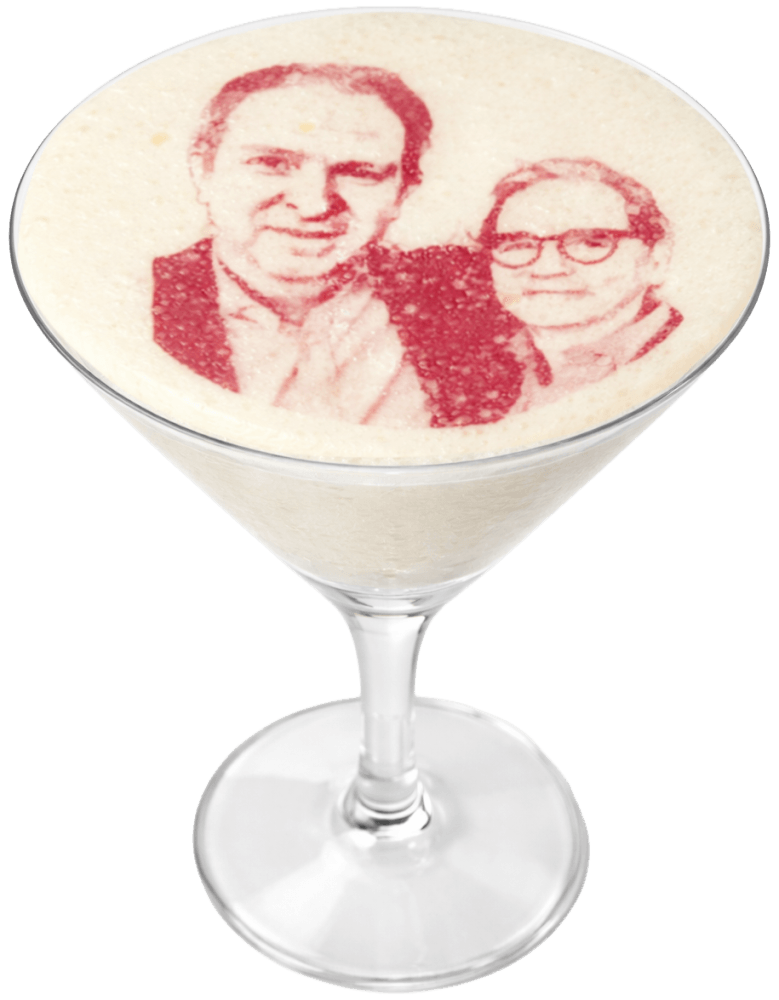
Phil Colicchio did not begin his career in restaurants. He trained as an institutional finance and real estate litigation attorney at a large firm. His entry into the culinary world came by accident—and a family connection.
His cousin is famed chef and restaurateur Tom Colicchio. “We didn’t know what a chef really was growing up in our little town in New Jersey,” Phil Colicchio said. “But when Tom started to really advance his career, he made one or two rookie mistakes, and I was the first phone call when that would happen.”
Phil began helping Tom structure his growing business interests. At the time, limited liability companies were still relatively new in common use. Creating entity structures that protected assets and separated risk was not yet routine in the restaurant world.
“I helped Tom organize his business, so he wasn’t going to run into these things again,” Phil said. “I created limited liability company structures that would allow Tom and his group to be protected and to segregate their different business interests.”
Word began to spread within the restaurant community. “I did not realize how influential Tom had become in the culinary community across America,” Phil said. “I began to get many calls. The next thing I knew, I was flying to Las Vegas, Los Angeles and the Caribbean because the hotel community and the commercial real estate community were recognizing the need for these third-party food and beverage arrangements.”
Phil found himself in a rare position. He understood deal structures, liability and institutional real estate. But he also understood chefs—their creative priorities, operational blind spots and long-term ambitions.
“There I was,” he said, “a lawyer who understood both sides and could speak both chef and real estate.”
That dual fluency made him valuable, but it also created conflicts. “The hotel industry wanted to do business with the food and beverage clients that I had,” he said. “That’s a conflict in a lot of ways.”
If he represented chefs, he could not simultaneously represent ownership. Yet he saw the need for a translator—someone who could structure deals that worked for both sides.
The solution was to create a consulting practice that would work exclusively on behalf of ownership, conduct curated RFP processes and bring the right culinary partners to the table without taking money from the talent side.
But he did not want to do it alone.

The Auburn handshake
Phil Colicchio and Schneck met through the Auburn University hotel school advisory board. Schneck, at the time, had spent years in hotel ownership and asset management through Thayer Lodging. He had also left the hotel space to build and exit a technology startup in hospitality.
At Auburn, Schneck asked Colicchio what he did. “And of course,” Colicchio said with a laugh, “I told him everything.”
Schneck listened and then disappeared for a few weeks. “Then, he came back and said, ‘You should really think about doing something with that consulting business in the hotel industry,’” Colicchio explained.
At the time, Colicchio considered his consulting work to be ancillary to his law practice. But a year later, Schneck called him for dinner.
“I sold my company,” Schneck recalled, “and I laid out a plan.”
Colicchio responded with a simple question: “Trip, I can’t do this alone. Are you prepared to do this with me?”
Schneck said yes. They shook hands. And, from that day forward, they began building what would become Colicchio Consulting.
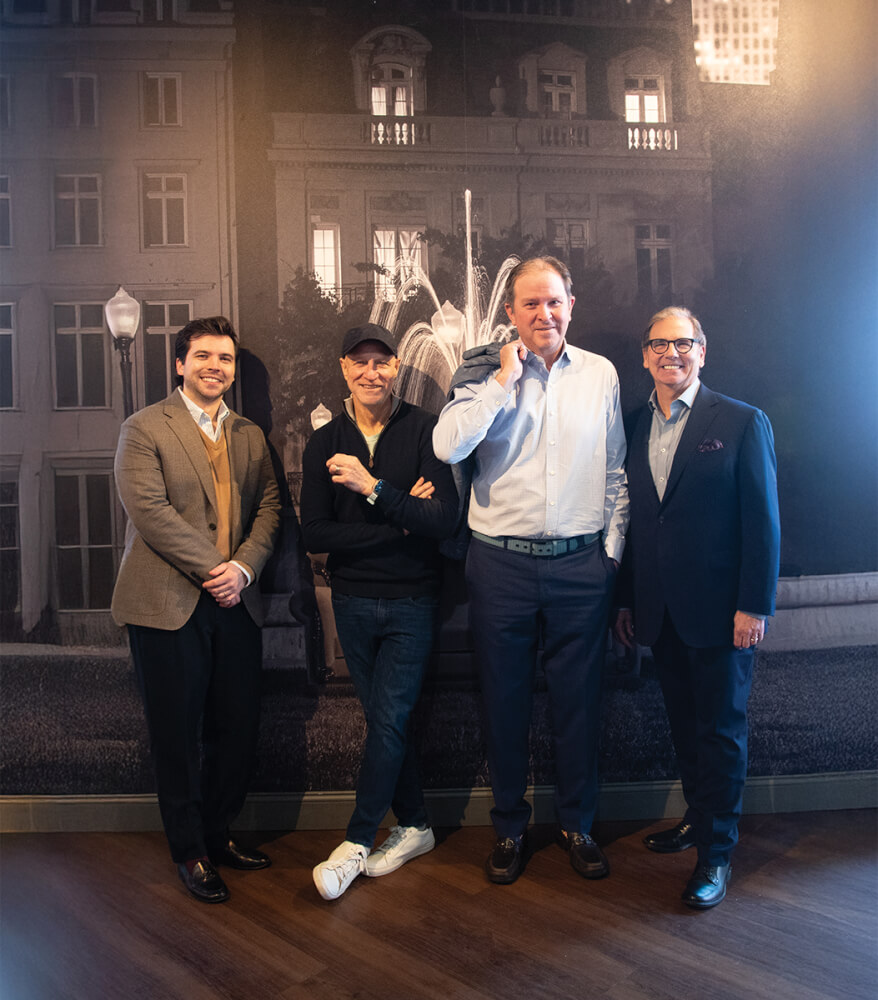
Schneck brought decades of hotel ownership experience and an asset manager’s discipline. Colicchio brought 20 years of relationships with top chefs and restaurant groups, along with deep legal expertise.
“One of the jobs of an asset manager is getting to know the skill sets and capabilities of brands and third-party managers,” Schneck said. “You wouldn’t hire a restaurant manager to run a hotel. Hotel operators don’t always make for the best food and beverage operators. It’s a very unique skill set.”
Phil’s son, Andrew Colicchio, is also part of the firm as managing director, bringing experience in live entertainment, venue management and VIP hospitality to round out the firm’s work.
Tom Colicchio is sometimes presumed to be part of the firm’s daily operations. “Tom is family, a close friend and a brilliant chef and restaurateur, but he’s not a member of our company,” Phil said. “Trip and I made a very conscious decision at the outset of our partnership that Colicchio Consulting would be independent and would dedicate itself to serving the needs and interests of ownership in all of our projects.”
If a hotel has interest in Tom as a candidate for a project, Phil steps aside. “There are hotel restaurants you’ve been in where Tom was one of several candidates and ultimately won the job,” Phil said. “There have been just as many projects in which Tom was asked to be a candidate but for various reasons, he was ultimately not the right fit. One size does not fit all.”
The relationship remains personal, but the business boundaries are clear.
Winning the local
If there is a single theme that runs through the firm’s philosophy, it is this: Win the local and you win the guest.
Colicchio often references the film “The Color of Money” to explain his thinking.
“There’s a Paul Newman line that sticks with me: ‘Money won is sweeter than money earned,’” he said. “I view getting the local to buy into the hotel restaurant as the money won. The money earned is my hotel guest. I’m making absolutely sure that I’m taking care of that guest, but the person I want to win with my F&B program is the local because if I win them, I know I’ve also won my guest.”
Schneck agreed that many hotels still overlook the population just outside their doors.
“They cater to the hotel guests when they’ve got an entire population within walking or driving distance that they could be servicing,” he said.
In markets with significant competition, especially in urban cores and resort destinations, that local audience can determine whether a restaurant becomes a true asset or remains a convenience outlet.
“If you believe that travelers want recognizable resident experiences and want to experience the market they’re visiting like a local, the way to do that is not through the rooms package,” Schneck said. “It’s through the other public spaces.”
Beyond food
Colicchio is quick to point out that the modern conversation is not just about food quality.
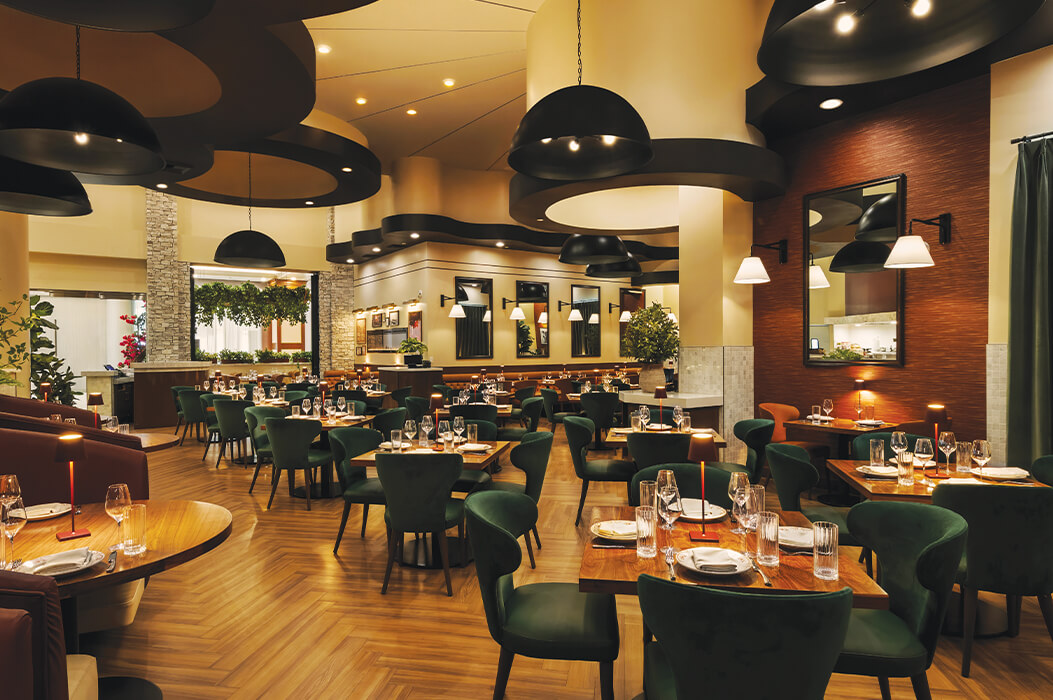
“It’s not just about food and beverage,” he said. “It’s food, beverage and entertainment. Everything that is going on in a hotel’s F&B program needs to be experiential. If it’s not, it’s not going to differentiate from others.”
Ten or 12 years ago, the experiential component often meant importing a big-name chef. That still matters, he said, but it is no longer sufficient.
“It’s thinking about design,” said Colicchio. “It’s thinking about good food, quality food, the hospitality component of presenting it in a way that makes people feel good. But it’s also about making lasting impressions that you can only make if you’re doing something that has an experiential component.”
That can mean flexible layouts that accommodate, for example, comedy shows, tastings, cocktail education nights or themed events that extend dwell time.
“There’s nothing wrong with using your F&B space for more than food and beverage,” said Colicchio. “The idea of being able to multipurpose what you’re doing is important to long term success and vitality.”
The point is to create programming that brings locals in at four in the afternoon, keeps guests engaged after meetings and generates revenue beyond the traditional dinner window.
The casino reset
Casino properties have become a visible segment of the firm’s portfolio, particularly in the years following the pandemic.
“If there was anything remotely positive that came out of the COVID pandemic, it was the elimination of the buffet,” Schneck said. “A lot of our casino work has started with how we are going to replace the buffet.”
Buffets were considered staples of casinos. But Schneck noted that many lost money for every ticket sold and encouraged waste over quality.
“Replacing the buffet with a food hall allows for optionality, for higher-quality food because it’s less about mass production and for portion control by going to individual stalls that are being prepared right there in front of you,” he said. “It’s a natural replacement.”
Colicchio added that the shift benefits everyone. “Guests are better off,” he said. “The facilities are better off. The chefs are better off for having more ability to take their good people and giving them opportunity.”
Food halls also allow families and groups to choose different cuisines in a single setting—an advantage Schneck believes aligns well with modern travel patterns.
(See sidebar on the JW Marriott Las Vegas for more on the company’s work in casinos.)
Curated point of view
Whether the project is a casino, a boutique property or a branded urban hotel, the firm begins with a framework.
“We approach projects with a point of view,” Colicchio said. “What is right for this project? This market?” That always means starting hyperlocal.
“Then we broaden out to what’s great and regional, and then national and then international,” he said.
Importing a New York chef into a town like Charleston, Schneck noted, rarely makes sense unless the market demands it. “We never want to be in a carpet-bagging situation,” he said.
Instead, they conduct private RFP processes, carefully select operators and evaluate financial projections, brand fit and long-term alignment.
“The minute you try to do everything all the time for everybody, that’s a miscalculation,” Colicchio said. “A food hall is not everything for everybody. It’s a carefully curated experience.”
In an era when guestrooms are nearly indistinguishable across major brands, that differentiation may determine which properties capture loyalty and which simply compete on price.
For Schneck and Colicchio, the path forward is clear. Win the local. Curate with intention. Design for experience. And treat food and beverage not as a checkbox, but as strategy.
