Outdoor hospitality has moved well beyond a niche travel trend. What began as a pandemic-era escape has matured into a growing segment that is drawing institutional investors, major hotel brands and travelers willing to pay for nature without sacrificing comfort.
For Dave Murray, CEO/president, Mscapes, the appeal starts with differentiation.
“There’s a branded hotel property probably five or six deep on every crossroads in America,” he said. “Operators and management companies are looking for other opportunities that may provide a higher return.”
Unlike traditional roadside lodging, outdoor hospitality is built around experience. Whether the setting is a riverfront, mountain retreat, marina or beachside resort, the product is less about a room and more about the environment around it.
Murray said COVID accelerated interest in the category as travelers sought space, privacy and open-air experiences. During a period when hotel amenities were restricted and travel felt complicated, glamping and other outdoor stays offered an attractive alternative.
“The idea of being able to get out by yourself, not wearing a mask or out with your family in the woods certainly resonated during that period of time,” he said.
That surge created rapid growth that has since normalized, but Murray said the category is now firmly established as part of the broader lodging landscape.
As demand has evolved, global hotel companies have taken notice. Large loyalty programs and reservation platforms can bring scale and visibility to remote or unconventional properties that independent operators often lack.
Murray said those systems make outdoor properties more accessible to mainstream travelers while also offering reassurance.

“There’s a security blanket of having a better concept of what you’re going to get, because the brand standards are there now,” he said.
Those standards, however, cannot mirror traditional hotels. Outdoor hospitality properties are highly location-specific, meaning what works on a beach may not work in the mountains or beside a river. That has made soft-brand models a natural fit, allowing individuality while still providing consistency in service and quality.
Murray believes the term “glamping” no longer fully captures what travelers are seeking. Rather than glamorous camping, he sees the category as experiential hospitality.
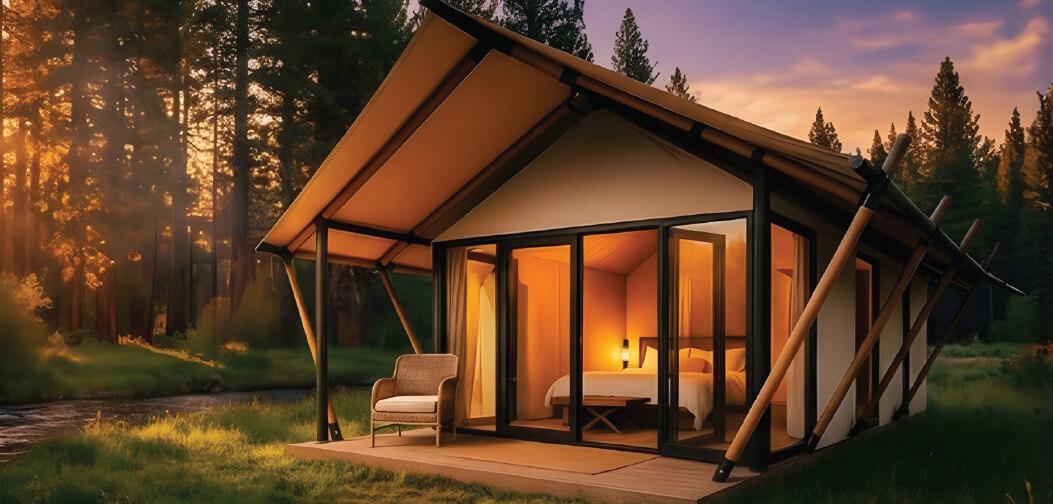
Today’s guests want immersion in nature with resort-level comforts, such as king beds, private bathrooms, climate-control capability and premium finishes.
“The higher demographic customer doesn’t have, in general, a big interest in walking across the woods at 2:00 a.m. to use the wash house,” he said. “They want to be outside, but they don’t want to be outdoors.”
That shift has also broadened the customer base. Murray said the earliest adopters tended to be younger travelers, but newer guests increasingly include affluent loyalty program members who may have never considered camping in the traditional sense.
The economics are also attracting attention.
Murray said one of the biggest advantages is speed to market. After entitlements and site approvals, many outdoor hospitality projects can open in roughly six months, compared with nearly two years or more for a traditional limited-service hotel.
“The units are less expensive than building a traditional limited-service hotel,” he said. “You get more bang for your buck. You get to market faster and you enjoy, in most cases, a better rate.”
For owners already operating hotels, there can also be efficiencies through shared purchasing, housekeeping systems and back-of-house infrastructure.
Melita Bouchet, director of operations & growth, Mscapes, said many entrants need guidance because outdoor luxury hospitality differs significantly from residential or multifamily development.
“We spend a lot of time educating people as they’re beginning this process,” she said. “People come in and they like a specific thing, but that might not be what actually fits where their property is located.”
She added that helping clients connect with architects, feasibility experts and financing sources can streamline the process and reduce early mistakes.
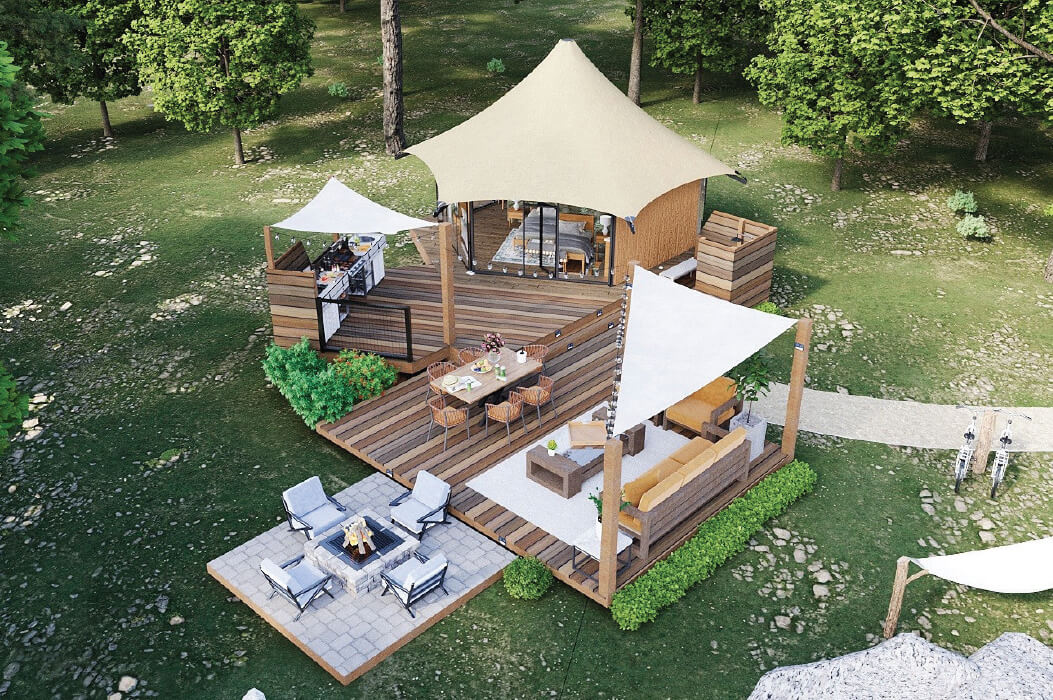
Mscapes works with developers and operators to create outdoor hospitality projects, supplying lodging units, furnishings, decks and outdoor amenities. The company also helps connect clients with architects, engineers and other partners, with a focus on faster development timelines, scalable operations and designs that blend with the natural environment.
Because travelers choose these destinations for the setting itself, sustainability has become central to development decisions.
Murray said Mscapes favors elevated structures on piers and decks rather than concrete slabs, helping preserve natural contours and reduce disruption to the land. Gravel access roads and other lower-impact site solutions are also common where feasible.
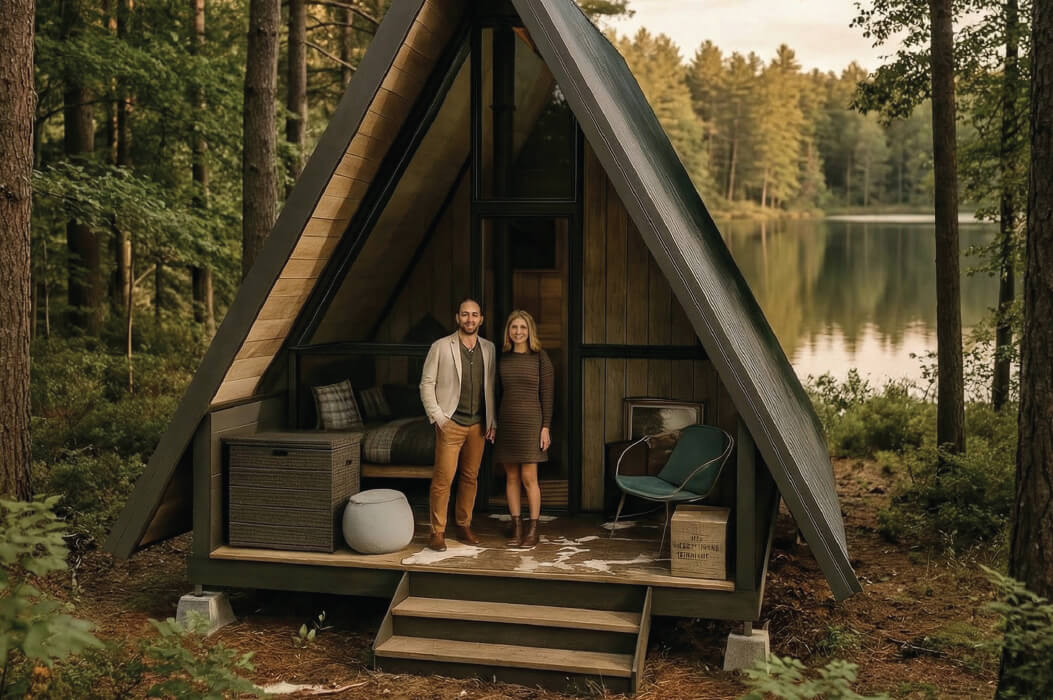
The company is also focused on prefabricated and engineered wood products such as glulam beams, cross-laminated timber and structural insulated panels.
“It’s almost a no-brainer to offer and push a sustainable option,” Murray said.
Bouchet added that Murray has consistently pushed the company to adopt innovations already gaining traction overseas and adapt them for projects in the U.S.
Outdoor hospitality can also reshape food-and-beverage economics. Rather than relying on labor-intensive restaurants, some resorts emphasize outdoor kitchens, grills and curated meal packages that guests prepare themselves.
Murray recalled describing the concept to one hotel operator: premium steaks, seafood, vegetables and other ingredients sold as part of the stay, then cooked by guests at their private site.
The reaction, he said, was immediate. “This guy’s eyes lit up,” Murray said. “All of a sudden, it’s part of the experience.”