When Keith Pierce woke up two weeks after becoming co-CEO of Sonesta International Hotels Corporation, something struck him: It felt the same as the two weeks before.
“Honestly, it’s been business as usual in many ways,” said Pierce, who had served as the company’s EVP/president, franchise & development before being promoted. “A lot of my day-to-day responsibilities have stayed the same—that’s part of the beauty of the co-CEO structure. Over the last five years, I’ve been focused on building out the franchise platform and growing the business on the franchise side. Going forward, much of that continues.”
When former CEO John Murray retired after five years leading Sonesta through one of the most dramatic transformations in the company’s history, Pierce and Jeff Leer were appointed co-CEOs, with defined lanes and a shared strategy.

—Keith Peirce

—Jeff Leer
“Having two minds working the same business every day is a force multiplier,” Pierce said. “It lets us accelerate in areas that a single CEO might have to deprioritize. For example, before the war with Iran, my plan was to be in Dubai to evaluate growth opportunities in the Middle East. If there was a single CEO, I would not have gone. There are other priorities that are higher in terms of what needs to be focused on. But because I have Jeff as a partner, it allowed me the freedom to go chase those opportunities.”
For Leer, who served as president/CEO of AlerisLife, the senior-living business of The RMR Group, stepping into the role meant finally experiencing the product he manages. “Coming from senior living, the biggest difference is that I can actually be a customer of our own product,” he said. “In senior living, I couldn’t be a resident. Here, I can be as close to our value creation—our hotels—every single day. I can experience what our customers experience and give direct, real-time feedback.”
Unified strategy
The co-CEO structure works, both executives explained, because their backgrounds don’t overlap. Pierce handles external growth, franchise expansion and brand development. Leer takes the back-of-house disciplines. The division is natural rather than negotiated.
“Jeff was a CFO before he was a CEO,” Pierce said. “His background and financial skills suited him to have the finance team, the IT team, the HR team and legal team. And I’m going to continue to do, in many respects, what I have been doing externally: representing the company, growing the footprint and moving toward a more balanced franchise, own and manage model.”
Leer noted of the partnership, “We’re aligned on what the strategy is, so it allows us the ability to both focus on the areas that are going to deliver that strategy as efficiently as possible.”
Both CEOs arrive at this moment carrying institutional knowledge that Pierce considers irreplaceable. Murray, who spent 34 years with Service Properties Trust (SVC), Sonesta’s holding company, and The RMR Group, gave Pierce a master class in the relational and transactional realities of running a firm where your capital partner’s offices are visible from the window.
“John had a really good feel for that organization,” Pierce said. “Having that legacy relationship was invaluable. As you’re growing a hotel brand and an operating company where 66% and 34% of the ownership and your capital partners are across the street, that relationship matters enormously.”
Leer brings a parallel fluency and has understood the structural economics of the Sonesta-SVC relationship from day one. “The structure in senior living was very similar to what Keith discussed around Sonesta and SVC,” Leer said. “And I understand the economics and the structural relationship of the industry.”
Beyond structure, Leer argued, the core skill set transfers directly.
“Senior living is very similar; it’s all about the customer experience,” he said. “The lens was around a different demographic, but the experience and the hospitality lens, and ensuring that the minute someone walked into the location was something they couldn’t have anywhere else—that translates well into hotel hospitality.”
Five years ago, Sonesta barely had a franchise system. Today, it has roughly 1,000 properties, 100,000 rooms and 13 brands. Understanding how it got there requires understanding what Sonesta is.
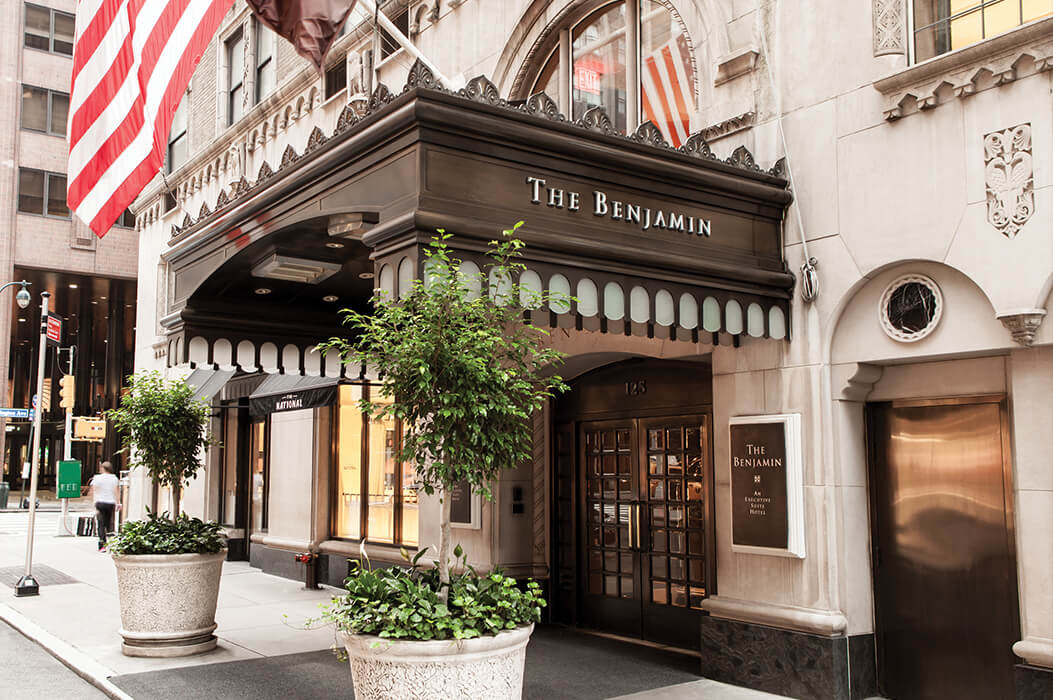
The company is 66% owned by the Portnoy family—with Adam Portnoy, president/CEO, The RMR Group, serving as director of Sonesta International Hotels Corporation—and 34% owned by SVC, a real estate investment trust (REIT) whose corporate offices sit directly across the street from Sonesta headquarters.
Sonesta co-owns, manages and franchises hotels. Pierce has coined a term for the positioning: “asset right.”
“We intentionally didn’t use ‘asset light,’ because we’re not,” he said. “We co-own four properties in New York City and one in Austin. But we also manage for SVC—today it’s about 70 hotels. From a growth standpoint, putting more locations into the marketplace will primarily be through franchising hotels.”
That franchise growth rests on a foundation five years in the making. As SVC evaluated its portfolio, it elected to sell approximately 210 hotels it had previously retained in Sonesta’s managed portfolio. The managed count may have dropped from 280 to around 70, but those 210 properties didn’t leave the Sonesta system; they converted to franchised hotels.
“Those dots stayed on the map,” Pierce said. “They just moved from the managed side of our portfolio to our franchise side, while SVC took the proceeds of the sale. Our asset-right formation, from a management standpoint, will expand and contract based on SVC’s objectives. I think we’ll be managing a number of their properties for years to come.”
Last year, Sonesta posted 26% net unit growth—a number that reflects both organic franchise additions and those SVC conversions. “We would only be able to do that if we had a franchise system that was on solid ground,” Pierce said.
Now, he noted, the focus shifts. “We need to continue to strengthen our commercial engines,” he said. “We need to continue to improve on our ability to perform for our owners and our franchisees—and continue to strengthen the overall value proposition, from both a B2B and a consumer standpoint.”
Growth progress
Sonesta has 13 brands in its portfolio, ranging from the upper-upscale Royal Sonesta and The James and the midscale Red Lion Inn & Suites and Signature Inns to the economy Americas Best Value Inns and extended-stay Sonesta Simply Suites and Sonesta ES Suites. There are also two soft brands, MOD Collection and Classico.
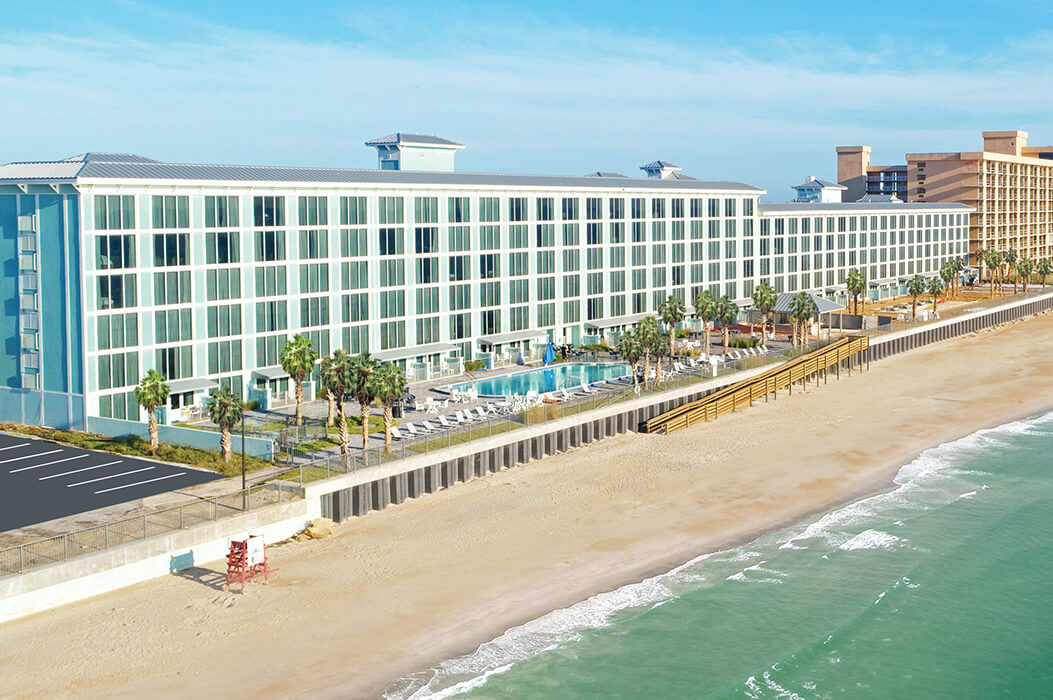

Geographically, North America is the clear priority. “We have more than 1,000 properties and approximately 100,000 rooms in the portfolio, and the majority of that is in North America,” Pierce said. “Still, there’s enough white space to grow this business significantly. That said, we do have some exposure to Latin America and the Middle East. We have hotels in Egypt, and we hope to announce a couple of new deals there—but it’s a fraction of what we’ll do domestically.”
One project in Egypt—a new-construction Royal Sonesta in Giza—was announced in late April. The 208-key hotel overlooking the pyramids is expected to open in 2028.
To help grow its portfolio in Latin America and the Caribbean, Sonesta entered a strategic alliance last year with AKEN Hotels & Resorts, a hotel group with a presence across South America and the Caribbean.
Domestically, two segments are generating the most momentum: extended-stay and soft-branding. With extended-stay, Sonesta now covers three distinct tiers. Sonesta ES Suites handles the upscale segment. Simply Suites operates in the midscale segment, a category that Pierce says has been running hot for three consecutive post-pandemic years. And Americas Best Value Studios, launched last October, targets economy.
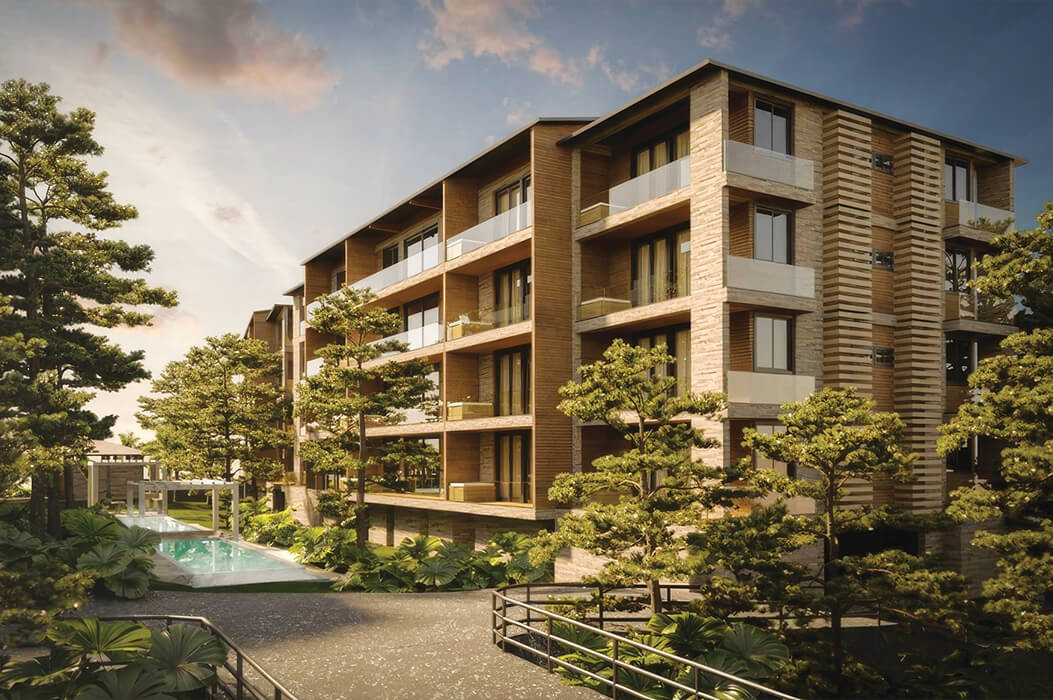
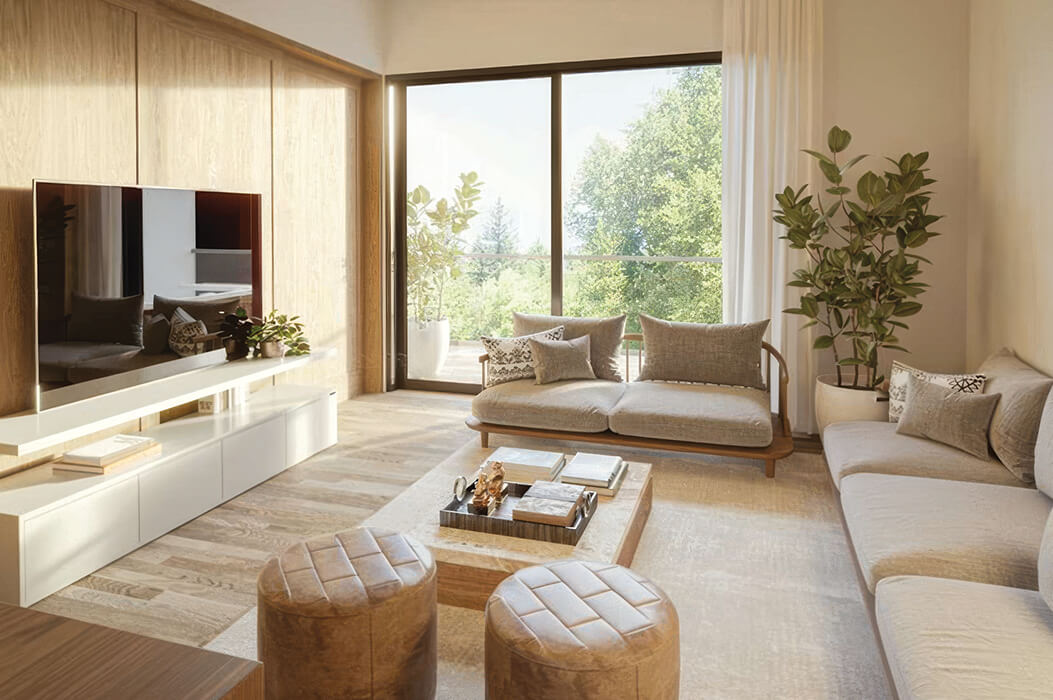
“Americas Best Value Studios was introduced to steal market share from our competitors who are playing in that economy extended-stay space,” Pierce said. Two franchise agreements have already been executed under the new brand.
The Simply Suites trajectory is equally telling. Noble Investment Group recently acquired 35 SVC assets—all Simply Suites properties—making it the brand’s largest owner in one transaction. Noble is also committed to developing eight additional properties. “We’ll see new-construction Simply Suites in the future through that relationship,” Pierce said. “That category has been really hot, and that’s where a lot of the capital is going for any new construction.”
On the soft-branding side, the MOD Collection has had a breakout period. A strategic partnership with Exploria Resorts brought four timeshare properties—in Orlando and New Smyrna Beach, FL; Myrtle Beach, SC; and East Stroudsburg, PA—onto the Sonesta platform under the MOD Collection. Properties in downtown Boston, Chicago and Healdsburg in Napa Valley followed.
The soft-brand value proposition is consistent: keep your independence but access a distribution platform you couldn’t build alone.
“Independent hotels can’t negotiate the same commission rates with Expedia and Booking.com that we can at scale,” Pierce said. “And under the soft brand, the reach is 100,000 rooms. The reach is sonesta.com. The reach is loyalty.” In 2026, Pierce expects the Signature Inn and Red Lion brands to see similarly strong conversion activity.
Building loyalty
Loyalty, Pierce opined, is the currency of the hotel industry—and Sonesta is working to accumulate it at a quicker pace.
The program currently has roughly 8 million members. Organic growth—signing up guests at the front desk and through digital channels—is the baseline. But Pierce has identified a faster path through strategic alliances.
“The majors have been building their loyalty programs for many decades,” Pierce said. “To get our loyalty member count up, it just takes time. You have to sign up members at the property level, but if you can add some of these adjacency verticals you can get it going a lot faster.”
The Exploria deal is the model. When the four resorts joined the platform, their loyalty members followed, with Sonesta and Exploria cross-pollinating their programs immediately.
“We have a couple more of those strategic deals in the works,” Pierce said. “If successful, they’ll take our loyalty membership to roughly nine million members—that’s how you get it going a lot faster, in addition to signing people up at the front desk.”
Leer frames the loyalty investment in terms of its value to franchisees.
“It’s about making sure we continue to both add value creation to our loyalty members but also expand our customer base,” he said. “We’ll do that through continued volume at our locations, and as we grow the franchise, getting more of their customers onto the platform, but also through strategic partnerships with other boutique hotel companies that are looking to expand their platform as well. We can create some synergies and really grow so that both of us win.”
Technology overhaul
Behind the growth agenda sits a technology infrastructure that is due for a significant upgrade—and Leer is leading the charge.
“This year, we’re focused a lot on our commercial engine and really simplifying and streamlining our brand.com,” he said. “We’re leveraging a lot of investments we’ve made in AI to really drive faster, more efficient qualified bookings so that our partners get a much more efficient leverage on their customer acquisition costs. AI will continue to be the hot button for the next couple of years as we get smarter as an organization about how to best leverage it.”
The consumer-facing piece is sonesta.com itself, and Pierce is candid that the current storefront has had the same look and feel for five years. That’s about to change.
“The team has been hard at work putting together a new UX, a new booking engine, not only in terms of efficiency for the consumer to book, but also feature functionality—Apple Pay, a whole host of ways to pay, points and cash, all of those things you have to have today,” Pierce explained. “Hopefully, in Q3 or Q4, we’ll be going live with a full new sonesta.com storefront. I would say it will reflect where Sonesta is today from where it’s been.”
Longer term, Leer is focused on the foundational layer, noting, “As we get the sales platform right, it’s really about looking at the underlying foundational tech stack—ensuring that not only can we deliver fast, efficient customer experiences, but we also deliver fast, efficient reporting capabilities that allow us to adjust and pivot our strategies along the way.”

Building momentum
Five years after being reinvented under pandemic pressure, Sonesta is now in a different kind of moment—one defined not by survival but by scale. The platform it spent years building is now attracting deals.
“Now, five years in the making, we’re getting calls from companies like Exploria that want to jump onto our platform and be part of the distribution,” Pierce explained. “In some cases, they’re boutique companies that wouldn’t necessarily come in under one of our brands, but maybe they come in as a strategic partnership, and it’s a vertical. Think all-inclusive. Think timeshare. Think other industries that are adjacent to hospitality. We’re starting to get those kinds of inquiries, and they’re really exciting for us at this point in our journey.”
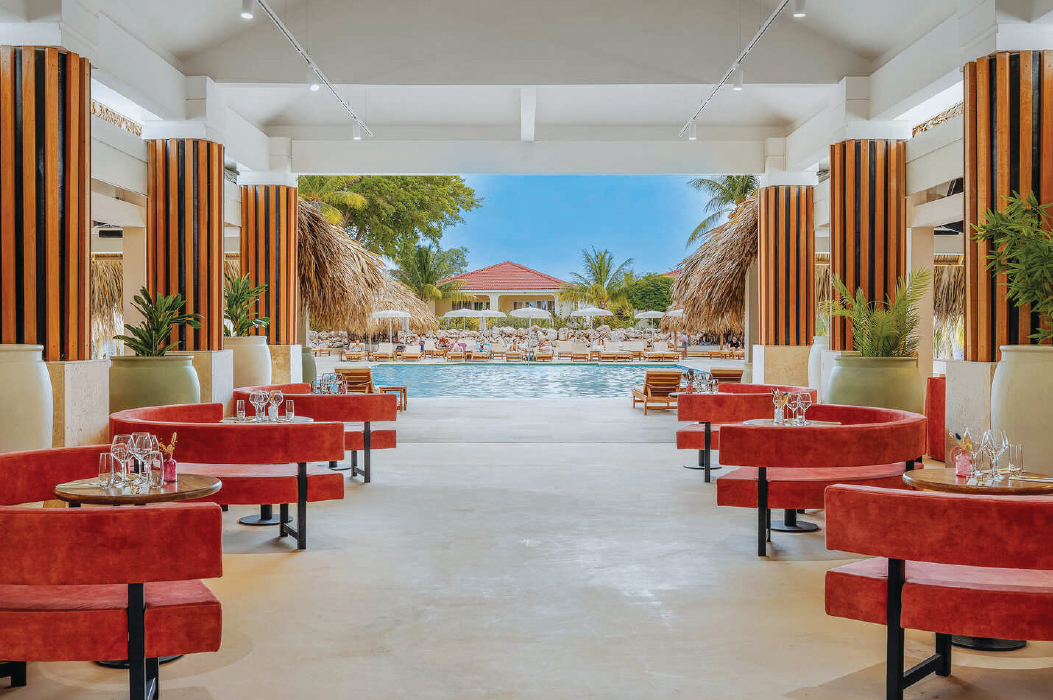
A new Curaçao property—a full-service Sonesta Resort that recently opened under new ownership—is one visible sign of that momentum. A pipeline of multi-property package deals under single owners represents another. And the strategic deals that Pierce alludes to, still unannounced, could prove to be the most consequential of all.
Asked what success looks like over the next three to five years, both Pierce and Leer reached for culture before metrics.
“For me, it’s really about: Are we establishing a culture that creates a value proposition for our customers and business partners that also aligns with our customer experience and our employee experience?” Leer said. “They all live and breathe our value creation for our partnership.”
Pierce framed it through the lens of Sonesta’s unusual structure.
“When you think about the franchise base, when they know that when we put out a brand standard, we have to put it through our own portfolio first,” he said. “If our capital partner across the street doesn’t agree with it, it’s not going to make it to the franchise community. That gives us a very unique lens on things.”
He continued, “From an owner-operator standpoint, the more folks can appreciate our willingness to work with them, and then them staying with us and growing more locations over time—that, for us, is success. Because we’re private, we have to turn a profit for our capital partners. We’re not living quarter to quarter, making decisions based on net unit growth. We can be more thoughtful about our growth and about the things that we do.”
SONESTAat a glance(all figures as of March 31) Location of headquarters: Boston Year founded: 1937 Parent company: Privately held Number of employees: 6,644 Number of brands: 13 Chain scales served: all except luxury Number of open hotels: 1,016 How many managed: 77 How many franchised: 939 Number of U.S. hotels: 949 How many states have Sonesta hotels: 49 Number of international hotels: 64 How many countries have Sonesta hotels: 10 Number of hotels in pipeline: 75 Locations of hotels: North & South America and Egypt |