When Virginia Guesthouse & Conference Center opened on the University of Virginia campus in Charlottesville, it represented more than a new hotel. Designed as a gathering place for the university, the local community and visitors alike, the project was conceived as a hybrid between hospitality, academic life and civic space—an approach that shaped everything from the building’s architecture to the layout of its public spaces and guestrooms.
Set at the gateway to UVA’s Ivy Corridor, the 214-room hotel includes more than 25,000 sq. ft. of meeting and event space, multiple dining venues and a rooftop bar overlooking the university and surrounding mountains. But the design team’s primary goal was not simply to build a hotel—it was to create a place that feels like an extension of the university itself.
“We wanted the building to feel unmistakably UVA, but also clearly of its own time,” said Stephen Brockman, principal, TenBerke, the architectural firm on the project. “Rather than imitate Jeffersonian architecture, we focused on carrying forward the university’s character through materiality, civic presence and a strong sense of place. The result is a building that feels grounded in UVA while also looking forward.”
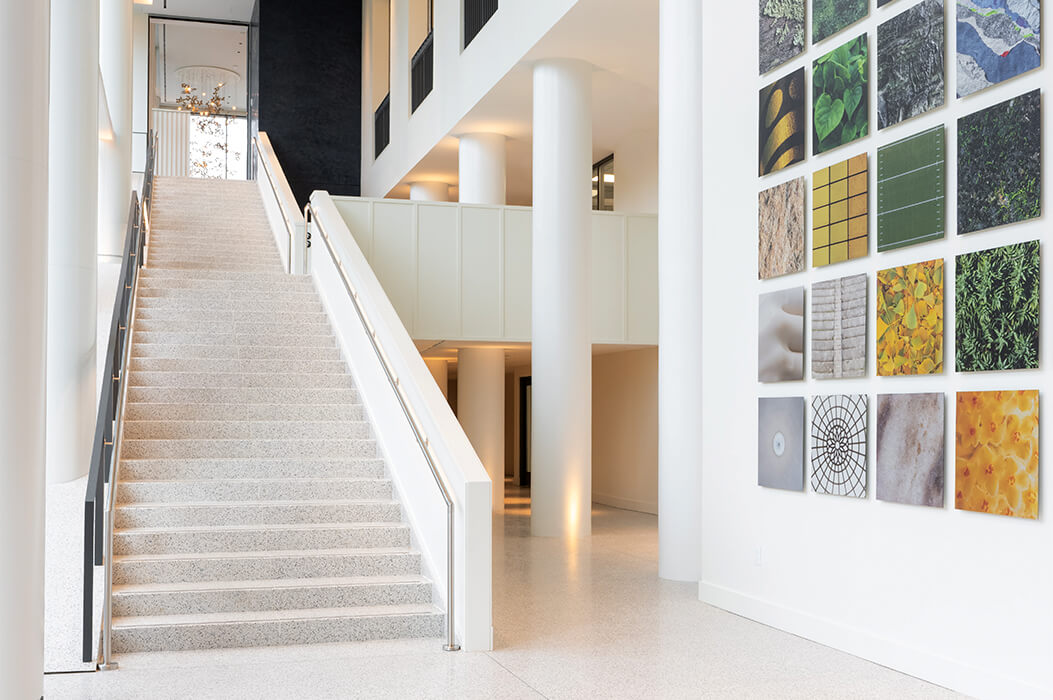
That balance between tradition and modernity became a guiding principle throughout the project. While the architecture acknowledges the historic language of the university, the interiors and public spaces were designed to support how people collaborate and connect.
“From the beginning, we saw it as more than a hotel,” Brockman said. “The public spaces along the promenade are open, visible and connected, shaped by the site’s topography to create a natural flow up and through the building. We wanted the spaces to feel like living rooms for the university—places where students, faculty, visitors and neighbors could gather comfortably and feel welcome.”
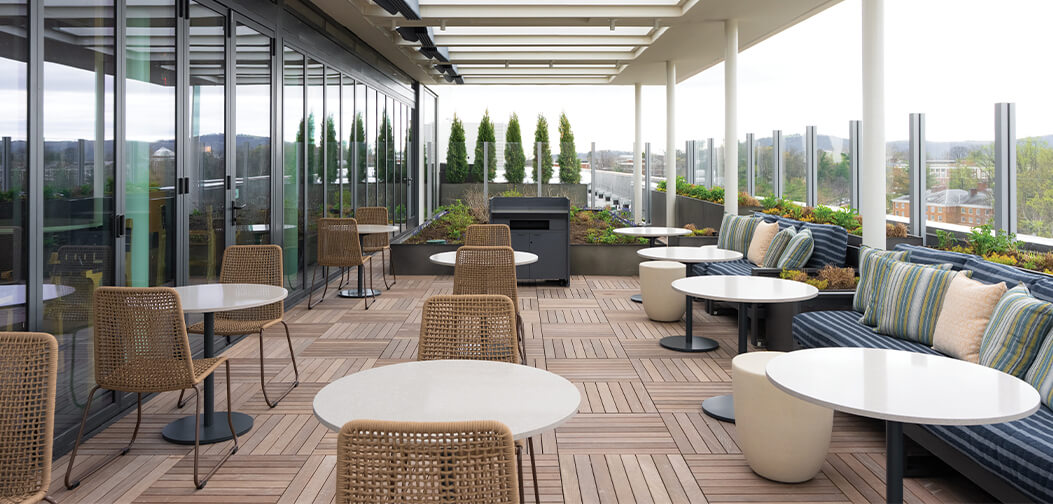
This idea of the property as a social and intellectual hub influenced the layout of the building’s public areas, which include flexible meeting spaces, lounges, dining venues and outdoor gathering areas. The rooftop bar, The Perch, was designed as a focal point, offering sweeping views and a relaxed environment.

“The views really drove the design,” Brockman said. “We saw the terrace as the focal point, with the indoor spaces extending that experience rather than competing with it. The goal was to create a destination that feels open to the surrounding landscape, connected to Charlottesville and inviting across seasons.”
The project’s large conference component presented a design challenge of how to create meeting and event spaces that could accommodate large groups while still feeling warm and welcoming.
“The goal was to make large-scale event space feel intuitive, welcoming, and human in scale,” Brockman said. “We focused on daylight, generous prefunction areas with views of the rich landscaped open spaces, strong adjacencies and a warm, straightforward material palette.”
Because the hotel will serve a wide range of guests—including conference attendees, alumni, prospective students and Charlottesville visitors—the design also needed to be flexible rather than overly formal.
“We designed the guest experience around comfort and ease of use,” Brockman said. “The rooms are calm, current and durable, with spaces that support both work and rest.”
Dining spaces were also designed with multiple audiences in mind. The Counter Café was positioned as an open, informal space that could serve hotel guests, students and local residents, while Poplar, the hotel’s main restaurant, was designed to feel more like a neighborhood destination than a traditional hotel restaurant.
“The key was to make both spaces feel public-facing from the start,” said Virginia Gray, senior associate, TenBerke. “Poplar, on the main floor, extends that idea into a full restaurant experience. Although it’s a sizable space, the design balances intimate areas for quiet conversation with places for larger, more energetic gatherings. As a morning-to-night, three-meal destination, it was designed to invite people to linger.”
Another unique aspect of the project is its role as a welcome center for prospective UVA students and their families, which directly influenced the arrival experience and lobby design.
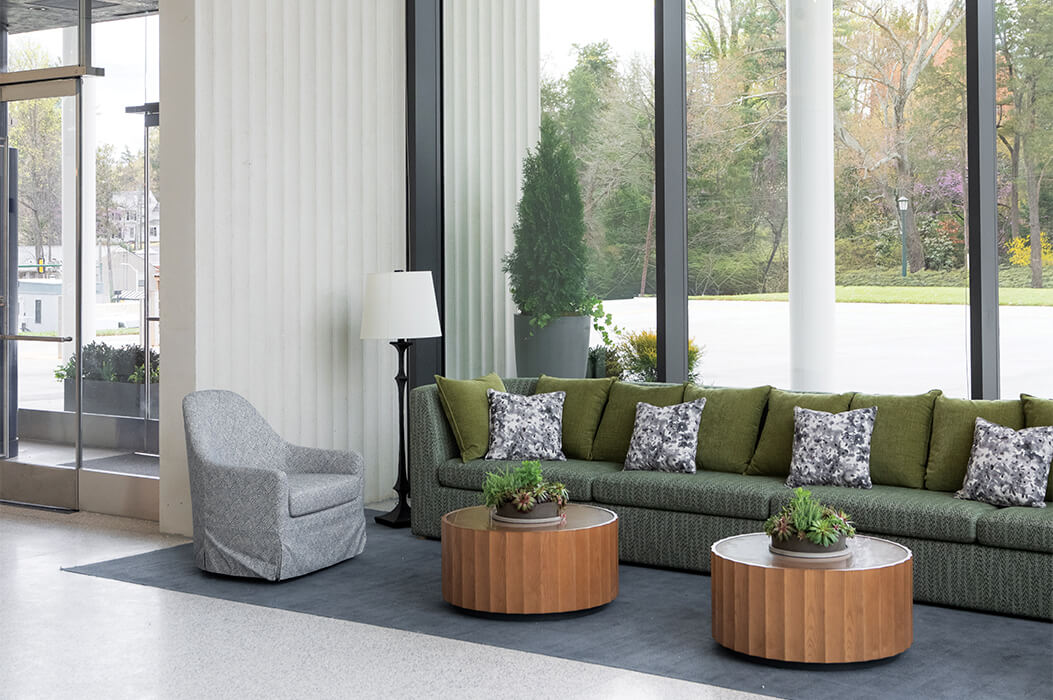
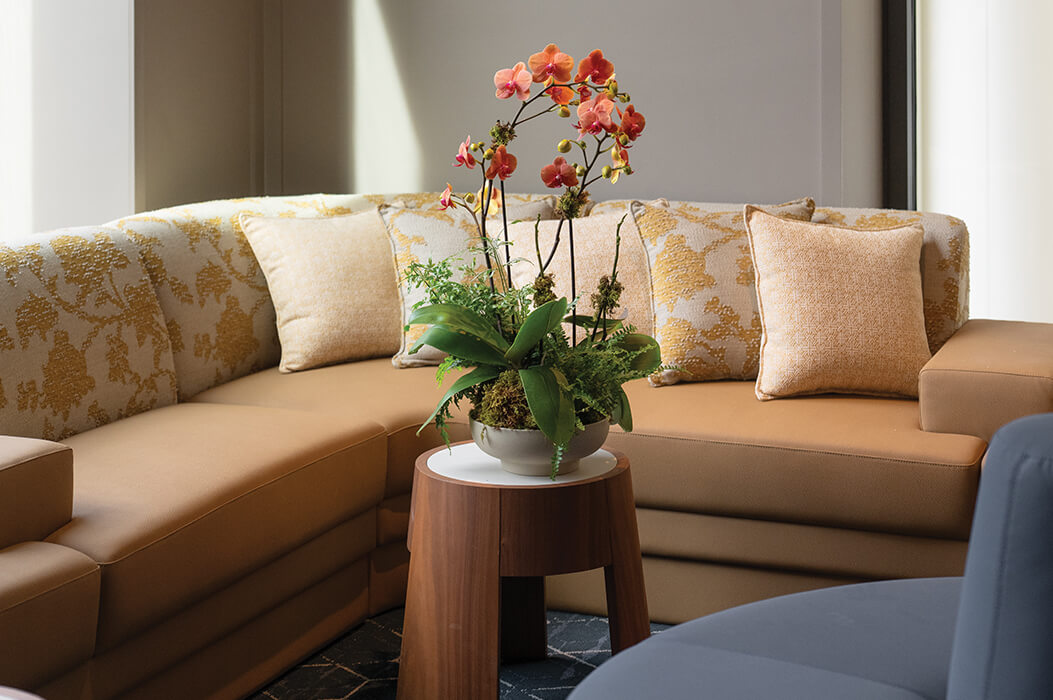
“We wanted the first impression to feel light-filled, open and reassuring, with clear orientation, comfortable furniture, good coffee and a sequence of smaller connected spaces rather than one oversized lobby,” Brockman said. “It’s designed to feel welcoming right away and to offer an immediate sense of connection to the university.”
Ultimately, the design team at Hanbury saw the project as something larger than a hotel—an environment where hospitality, education and community life intersect.
“For me, it’s the way the building makes university life visible,” said David Keith, design principal/CEO, Hanbury. “The living rooms, café, visitor spaces, guest-floor social areas and opportunities for books, exhibits, and shared university content all help the building feel like an extension of UVA’s intellectual and cultural life.”
Photos: Kate Thompson | Palindrome Creative Co.