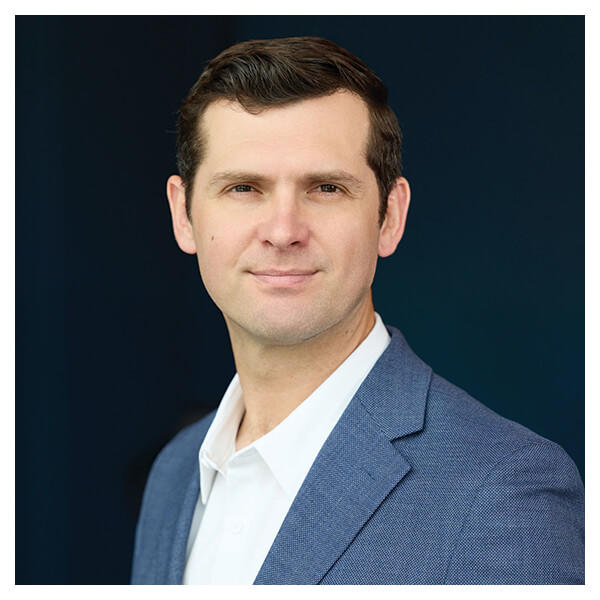
Hospitality America recently marked its 30th anniversary, reflecting on a business model centered on long-term partnerships, disciplined growth and operational consistency. The company, founded in 1995 by Chris Cargen, continues under the leadership of Ben Campbell, who assumed the role of president/CEO in 2024.
Hospitality America
For Campbell, the milestone underscores the responsibility that comes with sustaining a business over multiple decades. “For me, it’s pure legacy,” he said. “We don’t take lightly the opportunity we have to be in the position that we are. It’s on the backs of our partners that we’ve had for 30 years.”
Some of those partnerships date back to the company’s earliest hotels, reflecting a model built on repeat business and long-term alignment. Campbell pointed to consistency as a key factor in maintaining those relationships. “You don’t have 30-year relationships if you aren’t consistent in your performance and your partnership,” he said.
From its founding, Hospitality America has taken a measured approach to growth. Cargen, who now serves as chairman, said the company has been selective in the hotels it pursues, prioritizing those where it believes it can deliver on expectations. “One bad deal is the time consumption of 10 good ones,” he said. “You can get just mired in fighting the bad deal.”
That selectivity has shaped both the size and composition of the company’s portfolio. Hospitality America currently manages 19 properties, with another expected to open in the coming months. Over time, the company has developed nearly 40 hotels, with some assets sold as part of ownership strategies.
“You always have some subtraction along the way, too,” Cargen said, noting that asset sales are a natural part of the business. In those cases, he added, transactions have generally delivered strong returns for owners.
A distinguishing aspect of the company’s approach has been its involvement in projects beyond day-to-day operations. Hospitality America has often participated in development stages, including site selection, brand alignment and feasibility analysis. In some early cases, that work was completed internally.
“The literal first hotel we ever opened, Chris personally wrote that feasibility study,” Campbell said, recalling the company’s early efforts to secure financing and build credibility with lenders.
That hands-on, entrepreneurial approach became a defining characteristic of the company’s early years. Cargen built Hospitality America on a foundation of performance, trust and property-level leadership, allowing individual hotels to operate with a degree of autonomy while still benefiting from centralized financial and operational oversight.
His experience prior to founding the company informed that approach. Before launching Hospitality America, he spent two decades working with distressed and underperforming hotels, often in challenging financial situations.
“I learned how to squeeze a nickel and run hotels with almost zero staffing,” he said. “You also learn how you never want to have to do it again.”
Those early lessons shaped how the company evaluates opportunities, with an emphasis on avoiding hotels that could create long-term operational challenges. As a result, it has grown largely through a relatively small group of repeat investors rather than broad-based expansion.
As the company expanded, that entrepreneurial model evolved. When Campbell stepped into the CEO role, his focus shifted toward aligning and scaling the organization while maintaining its foundational principles.
“The foundation of how we do business is always the same,” he said. “What we say is what we do—we keep promises.”
Under Campbell’s leadership, the company has worked to formalize its operating approach, aligning teams under a unified structure and set of expectations. This has included standardizing processes, expanding above-property support and increasing investment in both people and technology. Internally, that effort is referred to as the “Hospitality America Way.”
The company’s trajectory has included periods of both growth and stabilization. Campbell pointed to the years following the COVID-19 pandemic as a defining stretch for the organization, when operational pressures required teams to take on expanded roles.
“Coming out of COVID was one of the hardest things that we ever had to do,” he said. “It stress-tested owners and us personally, cleaning rooms, checking in guests, working on limited staff.”
That period also led to increased focus on internal investment, particularly in staffing and organizational structure. The CEO said the company prioritized talent acquisition and development as conditions improved, adding, “Once we got to a level where we could actually truly invest in the people and our culture, that was a major shift.”
Cargen said those efforts have strengthened the company’s capabilities, particularly as workforce dynamics have shifted across the industry. “Finding, recruiting and retaining key employees is so important,” he said.
Leigh Holloway, chief strategy officer, said the company has approached operational changes with an emphasis on balance, adding structure while maintaining flexibility at the property level. “We’ve tried to be very thoughtful in ensuring that the tools we put in place are helpful and that they are equipping our teams to make data-driven decisions,” she said.
That approach extends to technology adoption. The company has implemented systems across operations and finance while working to centralize data for improved visibility. Holloway said the goal is to provide guidance without limiting decision-making at the property level. “It’s about the guardrails,” she said. “You hire the right leaders and give them the tools.”
Wes Cargen, VP, business intelligence, said the increasing volume of available data has shifted the focus toward interpretation and application. “The issue today is not a shortage of data—we have more access to data than we ever have,” he said. “It’s how to make sense of all of it.”
The company is also evaluating the role of AI within its operations, though leadership indicated that efforts remain focused on foundational capabilities rather than rapid deployment. “Our goal is really to just empower our business leaders to make the best decisions,” he said.
Campbell said data structure is a key priority as the company expands its use of technology. “Good data in, good data out,” he said, noting that consolidating information from multiple systems remains an ongoing effort.
Even as technology becomes more embedded in operations, leadership emphasized that the business remains centered on people. “At the end of the day, we’re a people business,” Wes Cargen said.
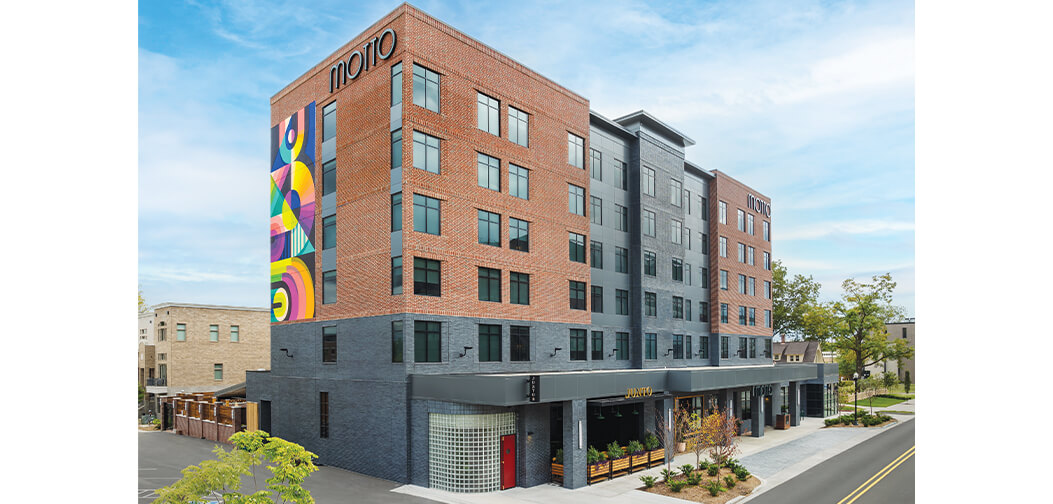
In addition to operational evolution, Hospitality America has expanded its scope of hotels over time. While the company’s early growth was closely tied to Hampton Inn development, it has since taken on a broader mix of assets, including lifestyle-oriented hotels.
Campbell noted that the company was among early adopters of developing select-service hotels in urban environments, pointing to hotels in markets such as Miami and Greenville, SC. Those hotels demonstrated demand for consistent, streamlined hotel experiences in downtown settings.
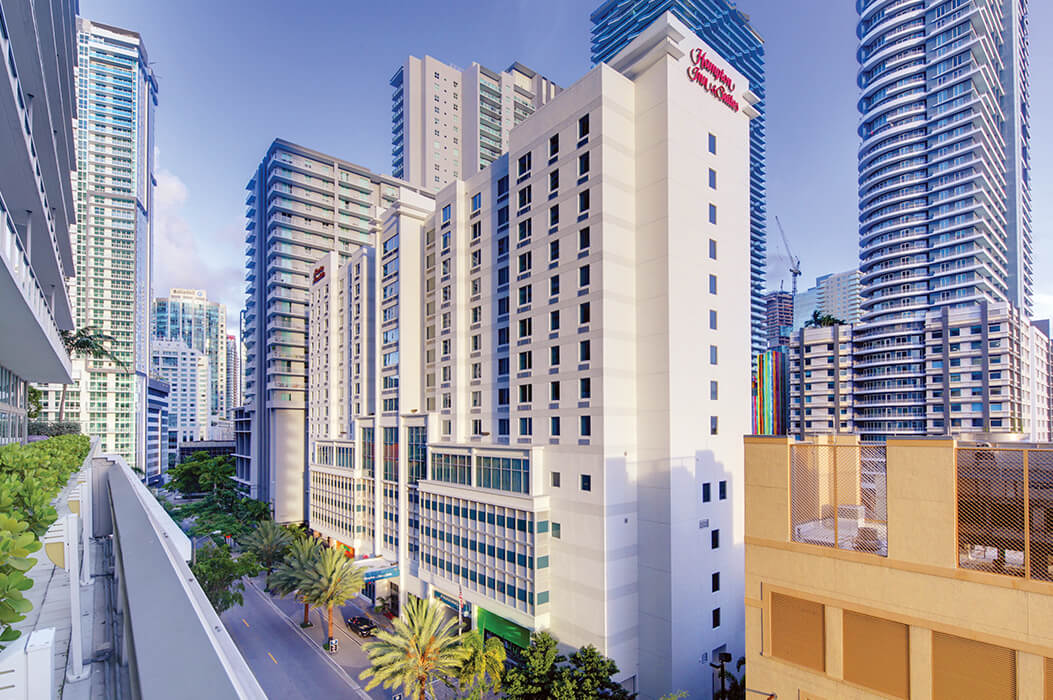
One such example is the Hampton Inn & Suites Miami/Brickell-Downtown developed during the 2008 financial crisis. Despite financing challenges at the time, the project moved forward and later achieved strong performance. “It’s odd how this business goes up and down,” Chris Cargen said. “But every hotel has a different basket of challenges and opportunities.”
Today, that perspective continues to inform how the company evaluates new opportunities. Rather than pursuing rapid expansion, it is focused on identifying hotels that align with its operational model and ownership expectations.
Campbell said the company plans to continue growing within higher-end and lifestyle segments, with several opportunities currently under evaluation. He noted that future expansion will remain aligned with the company’s established approach. “We are looking to grow in the right way,” he said.
Daniel Lock, VP, commercial strategy, said alignment with ownership groups will be a key factor in that growth. “We want that partnership to have the same long-term investment and view of that asset,” he said.
As Hospitality America enters its next phase, leadership pointed to continuity as a defining element of its strategy. Campbell noted that many members of the leadership team have long tenures with the company, contributing to consistency in both culture and operations.
“What we will do in the future will always be a nod to how Chris founded this company,” he said.