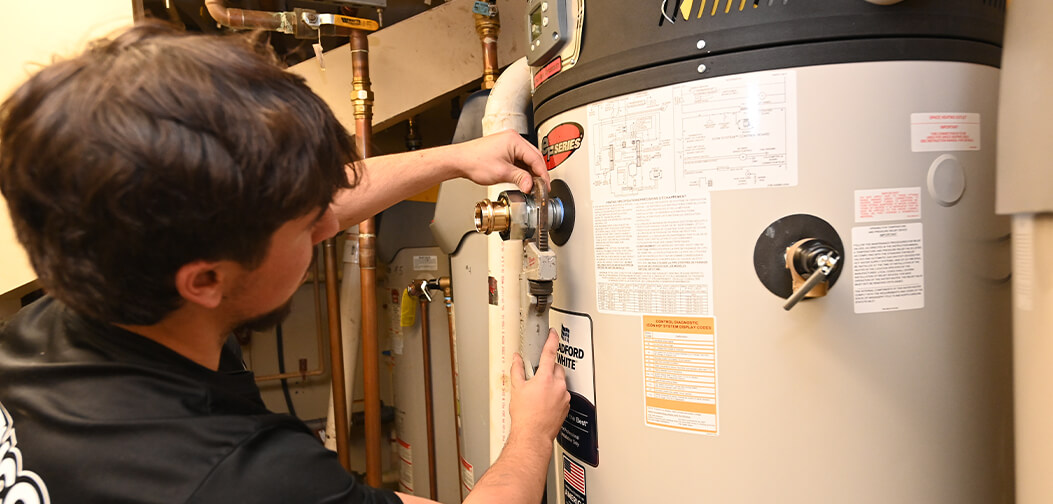
As hotels map out capital projects for 2026, a largely unseen system is moving to the forefront: hot water. From guest showers to laundry and foodservice, consistent performance is essential. With new federal efficiency standards set to take effect in October, operators are rethinking how and when they upgrade aging systems.
“Consistent hot water is fundamental to the guest experience,” said Cheryl Wagner, senior manager, mechanical solutions, Bradford White Corporation. “Guests may forgive a lot, but they rarely forget a cold shower or poor recovery during peak demand.”
That expectation is pushing hot water systems beyond routine maintenance conversations and into broader strategic planning. Wagner noted that reliability impacts not only guest satisfaction but also staff workload and operational flow.
“Hot water reliability also affects brand standards, online reviews and staff workload, because every service interruption creates complaints, room changes and emergency response from the property team,” she said. “From an operations perspective, dependable hot water is not just a comfort issue; it is a service continuity issue.”
The shift is being accelerated by updated U.S. Department of Energy efficiency standards, which apply to commercial gas water heating equipment manufactured on or after Oct. 6, 2026. As that deadline approaches, hotel owners are aligning capital plans with new equipment requirements, installation considerations and longer-term system design decisions.
“For hotels, that translates into more focus on whether their next replacement will require a different venting strategy, condensate handling, changes to mechanical room layout or utility coordination,” said Wagner.
The regulation is also changing how operators approach timing. Rather than waiting for systems to fail, many are planning upgrades earlier to avoid compressed timelines and limited options.
“Some replacements may involve more than swapping a water heater,” she said. “Owners who plan earlier have more room to sequence work around occupancy, compare technologies and budget for any system-level changes.”
For older properties, those system-level changes can be significant. Retrofitting hot water infrastructure often involves working within tight mechanical spaces and around legacy systems that were designed with less constraints.
“You’re often working around legacy piping, recirculation issues, outdated electrical or gas service and limited shutdown timelines,” she said.
Maintaining operations during those upgrades adds another layer of complexity. Hotels must ensure continuity for guestrooms, kitchens and laundry while minimizing disruption.
“The key is to treat retrofit work as a system redesign exercise, not simply an equipment replacement exercise,” she said.
At the same time, operators are evaluating a wider range of high-efficiency technologies. Options include condensing gas systems, storage solutions and modular designs that improve redundancy and performance.
“For many hotels, the right answer is not one technology in isolation but the right combination of storage and recovery for the property’s demand profile,” said Wagner. “The best technology is the one that fits the building, the load shape and the operating strategy for that hotel.”
Technology is also playing a growing role in risk management. Advanced controls and diagnostics are helping operators monitor system performance and address issues before they escalate.
“Controls and diagnostics are becoming much more important because they give operators visibility into system status, fault codes, lockouts, run history and performance trends before a guest complaint becomes a service failure,” said Wagner. “In hospitality, smarter controls are no longer a luxury feature; they are part of a more resilient hot water strategy.”
With the 2026 deadline fast approaching, Wagner advises operators to begin planning now, starting with a portfolio-wide assessment of existing systems.