As hotel companies continue to expand across markets and brands, one of the biggest challenges facing operators today is balancing consistency with individuality. Guests expect reliability—clean rooms, strong service and a seamless stay—but they also increasingly want hotels to reflect the destination and offer experiences that feel unique and authentic.
For Euan McGlashan, global cofounder/CEO, Valor Hospitality Partners, the answer lies in understanding what should be standardized and what should remain entirely local.
“Consistency should build confidence, not erase identity,” he said. “At Valor, our non-negotiables are clear: safety, service fundamentals and performance standards. Beyond that, we give our teams the freedom to interpret each property through a local lens.”
That philosophy is embedded in Valor’s guiding principle—“A Whole World of Local”—which focuses on leveraging global expertise to enhance what makes each destination unique, rather than imposing a uniform brand experience across all properties. “Our role isn’t to impose sameness, it’s to challenge it,” he said. “If two hotels feel identical, we’ve missed the point.”
One of the biggest misconceptions in hospitality, according to McGlashan, is that consistency comes from replication. In reality, he argued, reliability comes from culture, leadership and clear standards—not from making every hotel look and feel the same.
“We’re intentionally anti-formula because having a formula doesn’t create memorable hospitality,” he said. “Reliability comes from culture, strong leadership and absolute clarity around standards.”
Valor’s approach is to apply global expertise at the local level while also allowing local insight to influence the broader portfolio. That two-way exchange, he said, is where scale becomes an advantage rather than a limitation. The company’s food and beverage platform, SAVOR by Valor, is one example of that strategy in action.
“No two concepts are the same; each is designed to attract locals first, not just hotel guests, and to feel embedded in the community rather than imported into it,” McGlashan said.
From a guest’s perspective, authenticity is not about branding language or marketing—it’s about how a place feels. McGlashan believes guests can quickly tell when a hotel experience feels manufactured rather than genuine.
“For a guest, authenticity isn’t what they’re told; it’s what they feel,” he said. “Guests can spot something manufactured instantly. The real signals are human and tangible: the tone of service, design that reflects genuine context rather than clichés, and F&B that locals actually enjoy and relate to. If a hotel could be picked up and dropped somewhere else unchanged, it’s not doing its job.”
So what should hotels standardize? According to McGlashan, the answer lies mostly behind the scenes. “We draw a clear line: we standardize what builds trust, safety, operational discipline and service fundamentals,” he said. “We localize what creates character, from design and storytelling to F&B and the guest experience.”
This philosophy is what he refers to as standardizing the “invisible” parts of the hotel operation—systems, reporting, accountability and performance metrics—while allowing the visible experience to remain flexible and locally driven.
“We’re highly disciplined behind the scenes, but that discipline is deliberately invisible to the guest,” he said. “That structure allows the front-of-house experience to stay fluid, human and locally relevant. The way I see it, we have structure in the background and freedom at the front.”
As hotel companies grow, maintaining authenticity across multiple properties becomes more difficult. McGlashan believes the key mistake many companies make is trying to design authenticity from a central office rather than empowering local teams.
“You don’t scale authenticity by designing it centrally; that’s where others go wrong,” he said. “We scale a mindset: curiosity, local immersion and a willingness to challenge the obvious.”
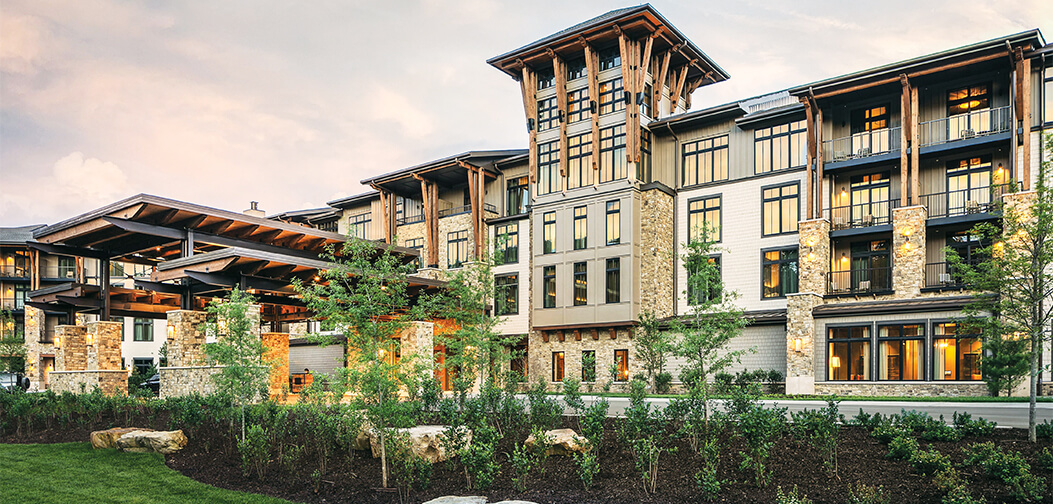
He points to Cloudland at McLemore Resort, Curio Collection in Rising Fawn, GA, as an example. While the property is located in the U.S., it incorporates Scottish Highland influences tied to the region’s history and the development team’s heritage, while also working closely with local farms, breweries, artists and makers. “That’s ‘A Whole World of Local’ in practice: global perspective, locally expressed,” McGlashan said.
Looking ahead, McGlashan believes the hospitality industry is moving away from rigid standardization as guest expectations continue to evolve. Travelers increasingly want individuality and authenticity, but they still expect operational excellence and reliability. “The future belongs to operators who can do it all: be globally informed yet locally executed, and highly disciplined behind the scenes while highly differentiated on the surface,” he said.